


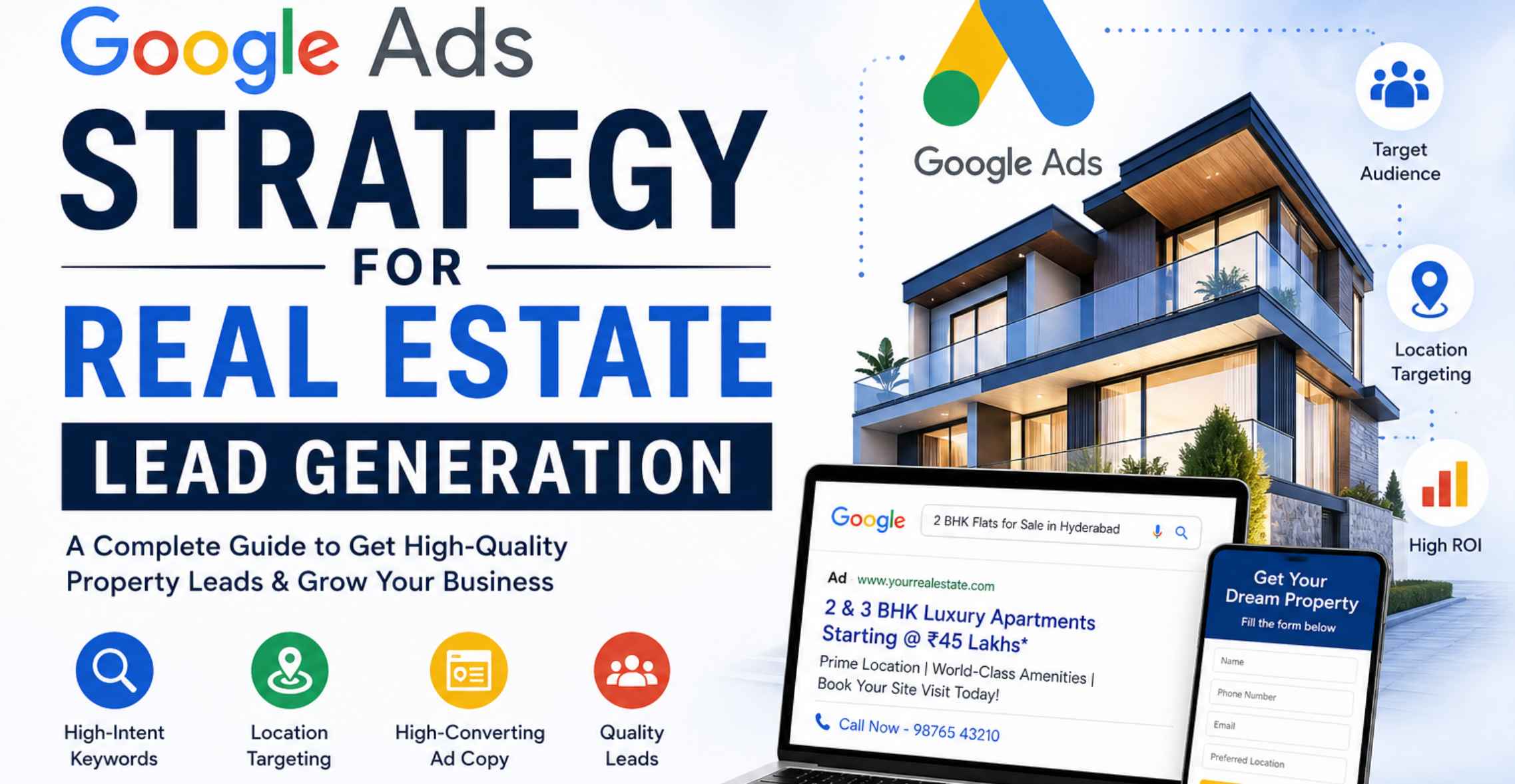
In today’s highly competitive real estate market, generating high-quality leads consistently is one of the biggest challenges for agents, brokers, and developers. While organic marketing takes time, Google Ads offers an immediate and scalable way to attract motivated buyers and sellers.
If used correctly, Google Ads can become your most powerful lead generation engine. This guide breaks down a proven, SEO-optimized Google Ads strategy for real estate lead generation to help you maximize ROI and close more deals.
Why Google Ads is Essential for Real Estate
Real estate buyers and sellers actively search on Google using high-intent keywords like:
- “2 BHK flats for sale near me”
- “luxury villas in [city]”
- “best real estate agent in [location]”
These users are already interested — your job is to capture that demand.
Key Benefits:
- Instant visibility on top of search results
- Highly targeted audience
- Pay only for clicks (PPC model)
- Measurable ROI
- Local targeting precision
Step 1: Define Your Real Estate Goals
Before launching campaigns, clarify your objectives:
- Buyer leads (residential/commercial)
- Seller leads (property owners)
- Rental inquiries
- Project promotions (new launches)
KPI Examples:
- Cost Per Lead (CPL)
- Conversion Rate
- Click-Through Rate (CTR)
- Return on Ad Spend (ROAS)
Step 2: Keyword Research (High-Intent Keywords)
Keyword targeting is the foundation of a successful Google Ads campaign.
Types of Keywords to Target:
1. Transactional Keywords (High Priority)
- “buy apartment in Hyderabad”
- “plots for sale in Vizag”
- “ready to move flats near me”
2. Location-Based Keywords
- “real estate in Gachibowli”
- “villas in Jubilee Hills”
3. Long-Tail Keywords
- “affordable 2 BHK flats in Hyderabad under 50 lakhs”
Pro Tips:
- Use exact match for high-value keywords
- Use phrase match for scaling
- Add negative keywords like “free”, “jobs”, “training”
Step 3: Campaign Structure for Real Estate Ads
A well-structured campaign improves performance and lowers cost.
Recommended Structure:
Campaign Level:
- Residential Properties
- Commercial Properties
- Rental Listings
Ad Group Level:
- Villas
- Apartments
- Plots
Keyword Level:
- Highly specific keyword targeting
Step 4: Create High-Converting Ad Copies
Your ad copy must grab attention and drive clicks.
Example Ad Copy:
Headline Ideas:
- Luxury Villas in Hyderabad – Book Now
- 2 & 3 BHK Flats Starting @ ₹45 Lakhs
- Premium Apartments Near IT Hub
Description Tips:
- Highlight USP (location, price, amenities)
- Add urgency (Limited Units Available)
- Include CTA (Call Now, Schedule Visit)
Step 5: Use Location Targeting Effectively
Real estate is hyper-local, so targeting the right audience is critical.
Best Practices:
- Target specific cities, zones, or pin codes
- Use radius targeting (e.g., 10–20 km around project)
- Exclude irrelevant locations
Step 6: Optimize Landing Pages for Conversions
Driving traffic is only half the job — converting visitors is key.
Essential Elements:
- Clear headline with property details
- High-quality images/videos
- Lead form (Name, Phone, Email)
- Call button (click-to-call)
- Trust signals (reviews, certifications)
Pro Tip:
Use dedicated landing pages for each campaign instead of sending users to your homepage.
Step 7: Leverage Ad Extensions
Ad extensions improve visibility and CTR.
Must-Use Extensions:
- Call Extensions (direct calls)
- Location Extensions
- Sitelink Extensions (Amenities, Pricing, Floor Plans)
- Callout Extensions (Free Site Visit, Bank Loan Assistance)
Step 8: Implement Conversion Tracking
Without tracking, you’re flying blind.
Track:
- Form submissions
- Phone calls
- WhatsApp clicks
- Page visits (key pages)
Use Google Tag Manager and Google Ads conversion tracking to measure performance accurately.
Step 9: Budgeting & Bidding Strategy
Recommended Approach:
Start Small → Scale Gradually
- Begin with manual CPC or Maximize Clicks
- Move to Target CPA after collecting data
Budget Tips:
- Allocate higher budget to high-performing keywords
- Pause low-performing ads
- Test multiple ad variations
Step 10: Retargeting (Remarketing Strategy)
Most users don’t convert on the first visit.
Retargeting Helps You:
- Re-engage interested users
- Increase conversion rate
- Build brand recall
Strategies:
- Show ads to visitors who didn’t fill forms
- Promote special offers or discounts
- Use display ads with property visuals
Step 11: A/B Testing for Continuous Improvement
Always test different elements:
- Headlines
- CTAs
- Landing pages
- Keywords
Goal: Improve performance over time and reduce cost per lead.
[Also Read: How Local SEO Helps Sell More Properties]
Conclusion
A well-planned Google Ads strategy for real estate lead generation can deliver consistent, high-quality leads and significantly boost your sales pipeline.
The key lies in:
- Targeting the right keywords
- Creating compelling ads
- Optimizing landing pages
- Continuously analyzing and improving
If executed properly, Google Ads can become your most profitable marketing channel in real estate.