

Introduction
Search Engine Marketing (SEM) is a digital marketing strategy used to increase a website’s visibility on search engine results pages through paid advertising. It primarily involves running ads on platforms like Google Ads and Microsoft Advertising, where businesses bid on keywords that users search for.
When someone enters a query into a search engine, SEM allows your business to appear at the top of the results instantly, ahead of organic listings. This makes it one of the fastest ways to drive targeted traffic to your website. Unlike traditional marketing, SEM focuses on reaching users who are already actively searching for specific products or services, making it highly intent-driven and effective for generating leads and sales.
SEM typically operates on a pay-per-click (PPC) model, meaning advertisers only pay when someone clicks on their ad. With precise targeting options, real-time performance tracking, and full budget control, SEM has become an essential strategy for businesses looking to grow quickly and compete in the digital marketplace.
How Search Engine Marketing Works?
- Keyword Research and Intent Targeting
Search Engine Marketing begins with detailed keyword research, which is the foundation of any successful campaign. Businesses must identify keywords that reflect user intent, whether someone is looking for information, comparing options, or ready to make a purchase. High-intent keywords such as “buy,” “hire,” or “best near me” tend to deliver better results because they target users who are closer to making a decision. Proper keyword targeting ensures that ads are shown to the right audience, reducing wasted spend and improving conversion rates.
- Ad Auction and Bidding Mechanism
When a user enters a query, search engines conduct an instant auction to determine which ads appear. This process is not purely based on how much you bid. Instead, it evaluates a combination of your bid amount, ad relevance, expected click-through rate, and landing page quality. This ensures that users see relevant and high-quality ads, while advertisers are encouraged to optimize their campaigns rather than just increase spending.
- Pay-Per-Click Model and Budget Control
SEM operates on a pay-per-click model, meaning you only pay when someone clicks on your ad. This makes it highly cost-effective because your budget is spent on actual engagement rather than passive visibility. Advertisers have full control over their spending, with the ability to set daily budgets, adjust bids, and pause campaigns anytime based on performance.
- Performance Tracking and Optimization
One of the biggest advantages of SEM is the ability to measure everything. Marketers can track impressions, clicks, conversions, and overall return on investment. This data allows for continuous optimization, such as refining keywords, improving ad copy, and adjusting bidding strategies to achieve better results over time.
Types of Search Engine Marketing
- Search Ads for High-Intent Users
Search ads are text-based advertisements that appear on search engine results pages. These ads are triggered when users search for specific keywords, making them highly relevant and effective for capturing demand. Since users are actively looking for solutions, search ads often generate high-quality leads and strong conversion rates.
- Display Ads for Brand Awareness
Display ads are visual advertisements that appear across various websites within a network. These ads can include banners, images, and interactive formats designed to attract attention. While they may not always result in immediate conversions, they are extremely useful for increasing brand visibility and reaching a wider audience.
- Shopping Ads for eCommerce Growth
Shopping ads display product details such as images, prices, and descriptions directly in search results. These ads are particularly effective for eCommerce businesses because they provide users with essential information upfront, helping them make quicker purchasing decisions.
- Video Ads for Engagement
Video ads allow businesses to communicate their message through engaging visual content. These ads are ideal for storytelling, product demonstrations, and building emotional connections with the audience.
- Remarketing Ads for Conversion Optimization
Remarketing focuses on targeting users who have previously interacted with your website but did not complete a desired action. By reminding these users of your brand and offering personalized messaging, remarketing campaigns significantly increase the chances of conversion.
Benefits of Search Engine Marketing
- Immediate Visibility and Fast Results
SEM provides instant visibility on search engines, allowing businesses to appear at the top of search results as soon as campaigns go live. This is especially useful for new businesses or time-sensitive promotions.
- Highly Targeted Audience Reach
With SEM, you can target users based on keywords, location, demographics, devices, and even behavior. This level of precision ensures that your ads reach the most relevant audience, improving overall efficiency.
- Measurable and Data-Driven Strategy
SEM offers complete transparency, with detailed analytics that allow marketers to track performance in real time. This data-driven approach helps in making informed decisions and optimizing campaigns effectively.
- Improved Conversion Rates
Since SEM targets users who are actively searching for specific products or services, it typically results in higher conversion rates compared to other marketing channels.
Advantages and Disadvantages of Search Engine Marketing
Advantages of SEM
Search Engine Marketing enables businesses to achieve fast and scalable growth. Campaigns can be launched quickly and adjusted based on performance, allowing marketers to focus on what works best. It also provides precise targeting options, ensuring that ads reach the right audience. Additionally, detailed analytics help track performance and optimize campaigns for better results.
Disadvantages of SEM
Despite its benefits, SEM can become expensive in highly competitive industries where keyword bids are high. It also requires continuous monitoring and optimization to maintain effectiveness. Another limitation is that traffic stops immediately when the budget is paused, making it a short-term strategy unless continuously funded.
Search Engine Marketing Agency
A search engine marketing agency helps businesses manage and optimize their paid advertising campaigns. These agencies bring expertise, advanced tools, and industry knowledge to create effective strategies. They handle everything from keyword research and campaign setup to performance tracking and optimization. For businesses that lack in-house expertise, hiring an agency can lead to better results and improved return on investment.
Search Engine Marketing SEM Services
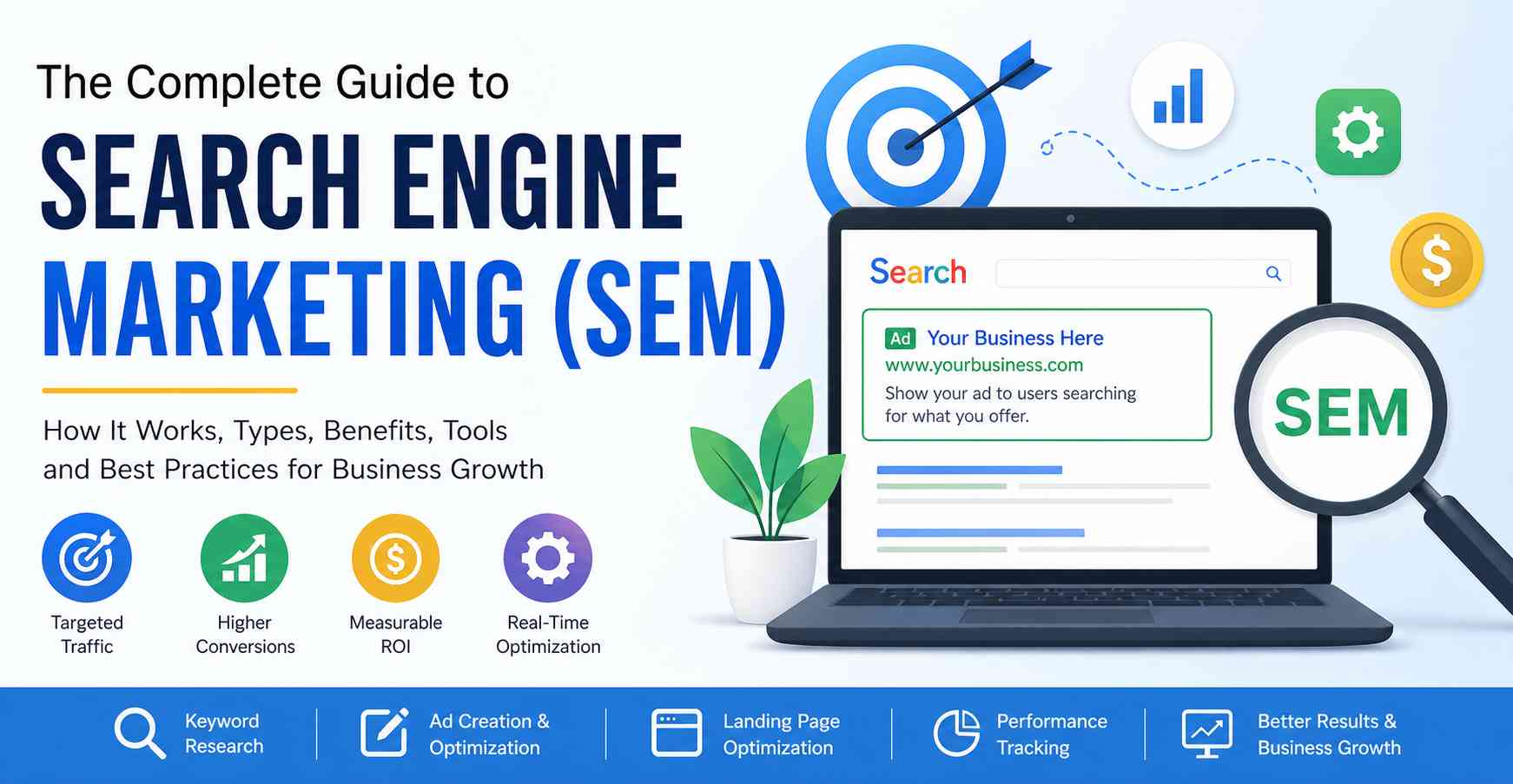
SEM services include a range of activities designed to maximize campaign performance. These typically involve keyword research, ad creation, landing page optimization, bid management, and performance tracking. Each of these elements plays a crucial role in ensuring that campaigns not only attract traffic but also convert visitors into customers.
Components of Search Engine Marketing
Search Engine Marketing consists of several essential components that work together to deliver results. Keywords determine when and where your ads appear. Ad copy influences whether users click on your ads. Landing pages ensure that users take the desired action after clicking. Bidding strategies control how much you pay for clicks, while analytics and tracking help measure success and identify areas for improvement.
Features of Search Engine Marketing
Modern SEM platforms offer powerful features such as geo-targeting, device targeting, ad extensions, and automation. These features allow marketers to refine their campaigns, improve ad visibility, and enhance user engagement. Automation and AI-driven tools further simplify campaign management by optimizing bids and targeting in real time.
Search Engine Marketing Tools
Successful SEM campaigns rely on a variety of tools for keyword research, analytics, competitor analysis, and campaign management. These tools help marketers identify opportunities, track performance, and make data-driven decisions. By leveraging the right tools, businesses can improve efficiency, reduce costs, and achieve better results from their campaigns.
Conclusion
Search Engine Marketing is a powerful digital marketing strategy that enables businesses to reach their target audience with precision and speed. By understanding how SEM works, its types, benefits, and tools, businesses can create campaigns that drive meaningful results. While it requires investment and ongoing optimization, SEM offers unmatched flexibility, measurability, and scalability. When executed effectively, it can significantly enhance online visibility, generate high-quality leads, and drive business growth.