


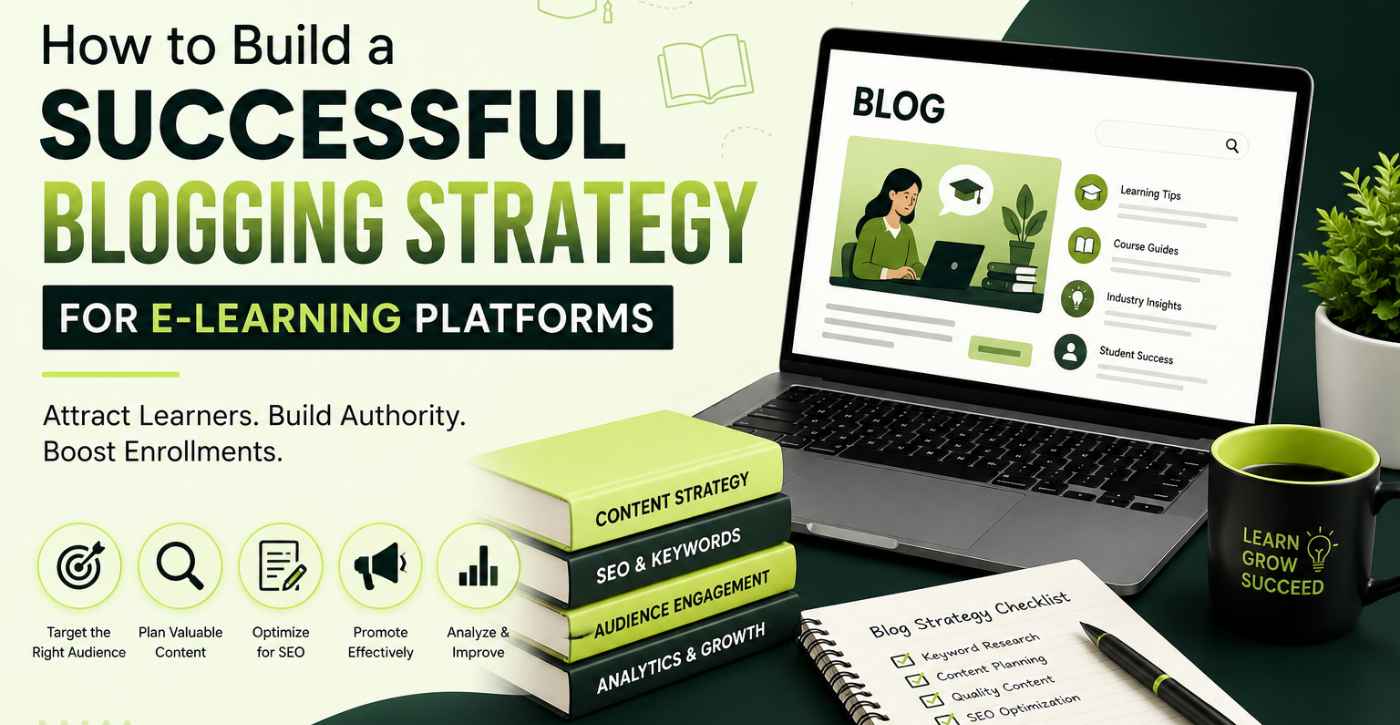
he e-learning industry has experienced remarkable growth over the past few years. Students, working professionals, and organizations increasingly rely on digital learning platforms to develop new skills, earn certifications, and access quality education from anywhere in the world. As competition continues to grow, e-learning providers must adopt effective marketing strategies to attract and retain learners.
One of the most powerful and cost-effective approaches is blogging. A well-planned blogging strategy allows e-learning platforms to improve search engine visibility, establish industry authority, engage learners, and increase course enrollments.
However, publishing random articles without a clear plan rarely produces long-term results. Success requires a structured content strategy that focuses on audience needs, search engine optimization, content quality, and performance analysis.
Understand Your Target Audience
Before creating blog content, it is essential to understand who will be reading it. An e-learning platform may serve different audiences, including:
- School and college students
- Working professionals
- Corporate employees
- Teachers and educators
- Career changers
- Entrepreneurs
Every audience has unique goals, challenges, and learning preferences. Start by creating learner personas that include:
- Age group
- Educational background
- Career goals
- Skill level
- Learning objectives
- Common challenges
For example, a student searching for programming courses may look for beginner-friendly tutorials, while an experienced software developer may prefer advanced technical content. Understanding your audience helps you create articles that answer their questions and solve their problems.
Conduct Keyword Research
Keyword research is the foundation of every successful blogging strategy. Search engines connect users with content through keywords. Identifying the right keywords increases the chances of attracting qualified visitors to your website. Focus on different keyword categories, including:
Short-Tail Keywords
Examples include:
- Online courses
- Digital learning
- E-learning platforms
Long-Tail Keywords
Examples include:
- Best online coding courses for beginners
- How to choose an e-learning platform
- Digital marketing certification programs
Long-tail keywords often have lower competition and higher conversion potential. Several tools can help identify valuable keywords, including:
- Google Keyword Planner
- Ahrefs
- SEMrush
- Google Search Console
Look for keywords that align with your educational services and course offerings.
Create a Content Calendar
Consistency is one of the most important factors in blogging success. Publishing content without a schedule often leads to inconsistent traffic and lower audience engagement. A content calendar helps organize your publishing strategy by outlining:
- Content topics
- Target keywords
- Publishing dates
- Content formats
- Distribution channels
Many successful e-learning platforms publish content weekly or biweekly to maintain audience engagement.
Plan your content several months in advance and include a combination of:
- Educational guides
- Industry trends
- Tutorials
- Case studies
- Student success stories
- Frequently asked questions
A well-organized calendar ensures that your content remains relevant throughout the year.
Focus on High-Quality Educational Content
Quality should always take priority over quantity. Educational blogs should provide valuable information that helps readers learn something new. Some effective content formats include:
Tutorials: Step-by-step tutorials are among the most popular content formats in the education industry.
Examples include:
- How to learn Python in 30 days
- A beginner’s guide to graphic design
- How to master digital marketing fundamentals
Case Studies: Case studies demonstrate how students or organizations achieved specific goals using your courses.
Industry Updates: Publishing articles about emerging technologies and educational trends helps position your platform as an industry authority.
Learning Resources
Provide downloadable materials, study guides, templates, and checklists to increase reader engagement. Educational content should always be accurate, practical, and easy to understand.
- Optimize Your Blog for Search Engines: Creating excellent content is only one part of the process. Search engine optimization ensures that your articles are visible to potential readers.
- Optimize Headlines: Your title should include the primary keyword naturally.
Instead of writing: “Tips for Better Learning”
Write: “10 Effective Learning Strategies for Online Students”
Use Proper Heading Structures: Organize your content using headings and subheadings. A clear structure improves readability and helps search engines understand your content.
Optimize Meta Descriptions: Meta descriptions influence click-through rates. Keep them concise and include relevant keywords.
Add Internal Links: Linking related articles improves navigation and encourages visitors to explore additional content. Internal links also help search engines discover important pages on your website.
Optimize Images: Compress images to improve loading speed and use descriptive alt text to increase accessibility.
Encourage Student Engagement:
A successful educational blog should create opportunities for interaction.
Encourage engagement by:
- Adding discussion questions
- Including quizzes
- Allowing comments
- Conducting surveys
- Sharing interactive content
When readers actively participate, they spend more time on your website, increasing engagement metrics and strengthening your online community.
Building a relationship with learners encourages long-term loyalty.
Promote Your Content Across Multiple Channels
Publishing an article does not guarantee traffic. Content promotion is essential for reaching a larger audience. Effective promotion channels include:
- Social Media: Share blog posts on platforms such as LinkedIn, Facebook, Instagram, and X.
- Email Marketing: Email newsletters help distribute new articles directly to subscribers.
- Video Marketing: Convert blog posts into short educational videos and publish them on video-sharing platforms.
Online Communities
Participate in educational communities and share valuable content where appropriate. Repurposing content across multiple platforms increases visibility and maximizes content value.
Track Performance and Improve Your Strategy
Measuring performance allows you to identify successful content and improve underperforming articles.
Important metrics include:
- Organic traffic
- Keyword rankings
- Bounce rate
- Average session duration
- Page views
- Conversion rates
- Course enrollments
Analytics tools provide valuable insights into user behavior. Review your data regularly and update older articles to maintain search visibility. Continuous optimization ensures long-term growth.
[Also Read: How Positive Feedback Influences Student Decision-Making]
Conclusion
Building a successful blogging strategy for e-learning platforms requires careful planning, audience research, keyword optimization, content consistency, and continuous performance analysis. By creating valuable educational content and implementing effective SEO techniques, e-learning businesses can attract more visitors, establish credibility, and increase student enrollments.
A strategic approach to blogging transforms an educational website into a powerful learning resource that benefits both learners and course providers. As the digital education industry continues to evolve, investing in a well-structured content marketing strategy will remain one of the most effective ways to achieve sustainable growth.