


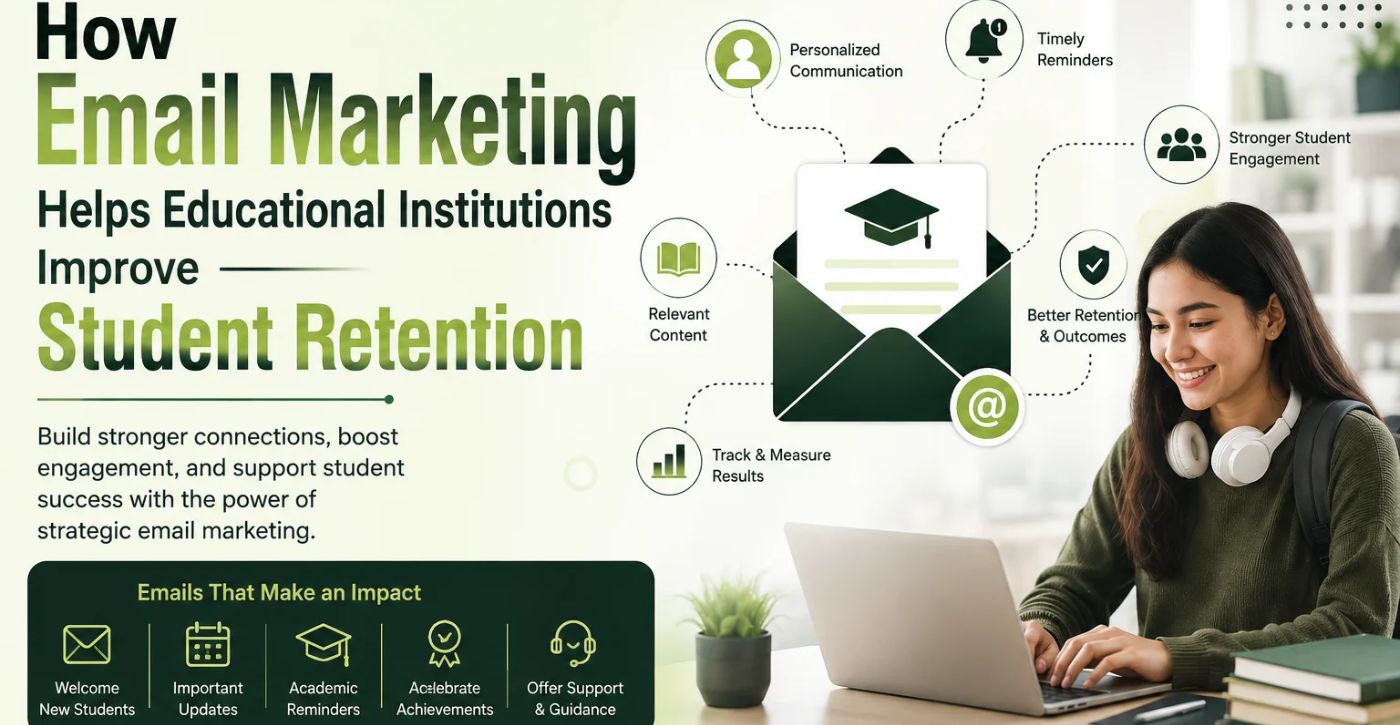
Student retention is one of the biggest priorities for educational institutions today. Whether it is a school, college, university, coaching center, or online learning platform, keeping students engaged throughout their educational journey is essential for long-term growth and success. While academic quality plays an important role, consistent communication also has a significant impact on whether students remain connected with an institution.
This is where email marketing for student retention can make a meaningful difference. With personalized, timely, and relevant email communication, educational institutions can strengthen relationships with students, improve engagement, provide valuable support, and encourage learners to continue their studies.
What Is Email Marketing for Student Retention?
Email marketing involves using targeted email communication to share useful information, updates, reminders, educational resources, and personalized messages with students. When strategically planned, these emails can go beyond promotional communication and become an important part of the student experience.
A well-designed student retention email strategy can help institutions communicate with learners at different stages, from enrollment and onboarding to course completion and graduation. Instead of sending the same message to everyone, institutions can use student data and behavior to deliver content that matches individual needs and interests.
1. Builds Consistent Communication With Students
Students can sometimes feel disconnected from an institution, particularly when they are studying online or attending large educational organizations. Regular email communication helps maintain a connection.
Institutions can send newsletters, academic updates, event invitations, important announcements, and learning resources. Consistent communication keeps students informed and reminds them that the institution is available to support them. When students receive useful information regularly, they are more likely to feel connected and involved in the educational community.
2. Personalization Improves Student Engagement
Generic emails may not attract much attention. Personalized emails, however, can make communication more relevant.
Educational institutions can personalize emails based on factors such as course enrollment, academic interests, participation, previous interactions, and learning progress. For example, a student who has not logged into an online course for several days could receive a friendly reminder along with helpful resources. Personalized communication shows students that the institution understands their needs. This can increase engagement and contribute to stronger student relationships.
3. Automated Emails Help Students Stay on Track
Automation is another powerful advantage of email marketing. Institutions can create automated campaigns that deliver relevant messages based on specific student actions or milestones.
For example, an automated email sequence can welcome a newly enrolled student, provide information about accessing course materials, remind them about upcoming deadlines, and encourage them to complete assignments.
Automated emails can also be used to recognize achievements. Sending a congratulatory message after a student completes a module or reaches an academic milestone can provide positive reinforcement and encourage continued participation.
4. Timely Reminders Reduce Missed Opportunities
Students often have multiple responsibilities and may forget important academic deadlines. Email reminders can help them stay organized.
Institutions can send reminders about:
- Assignment deadlines
- Examination dates
- Course registration
- Attendance requirements
- Tuition payment deadlines
- Workshops and events
- Project submissions
- Academic counseling sessions
These reminders are simple but valuable. Helping students avoid missed deadlines can reduce frustration and create a smoother learning experience.
5. Supports At-Risk Students
One of the most important applications of email marketing is identifying and communicating with students who may be losing interest or becoming less active.
For example, reduced attendance, lower course activity, or missed assignments may indicate that a student needs additional support. Institutions can use these signals to send targeted emails encouraging students to contact an advisor, access learning materials, or seek academic assistance.
The goal should not be to overwhelm students with messages. Instead, communication should be supportive, helpful, and focused on solving potential challenges before they become serious problems.
6. Creates a Stronger Sense of Community
Student retention is not only about academic performance. A student’s sense of belonging can also influence their decision to continue with an institution.
Email newsletters can highlight student achievements, upcoming activities, faculty insights, campus events, workshops, competitions, and community initiatives. Sharing these experiences helps students feel that they are part of something larger than their individual course.
Institutions can also use email to promote student clubs, networking opportunities, mentoring programs, and extracurricular activities. These interactions can strengthen relationships between students and their educational community.
7. Provides Valuable Learning Resources
Educational emails should provide value rather than simply promote courses or services. Institutions can share study tips, tutorials, industry insights, career guidance, educational videos, webinars, and useful resources.
For example, an institution offering professional training could send students interview preparation tips, project ideas, industry updates, and career development resources.
When students consistently receive useful content, they are more likely to open future emails and remain engaged with the institution.
8. Collects Student Feedback
Email marketing can also help educational institutions understand the student experience.
Short surveys and feedback emails can ask students about course quality, teaching methods, learning resources, support services, and overall satisfaction. This information can help institutions identify areas that need improvement.
Acting on student feedback is equally important. When learners see that their opinions are considered and improvements are made, they may develop greater trust in the institution.
9. Encourages Continued Learning
Educational institutions can use email campaigns to encourage students to continue their learning journey.
For example, after a student completes one course, the institution can introduce relevant advanced courses, certifications, workshops, or specialization programs. Recommendations should be based on the student’s interests and previous learning rather than being overly promotional.
This approach can increase opportunities for continued enrollment while helping students discover educational programs that support their career goals.
10. Measures and Improves Retention Campaigns
One major advantage of digital email marketing is the ability to measure campaign performance. Institutions can monitor metrics such as open rates, click-through rates, registrations, survey responses, and engagement with specific resources.
These insights help marketers understand which types of communication are most effective. If students respond positively to personalized reminders but ignore generic newsletters, the institution can adjust its strategy accordingly.
Testing different subject lines, email formats, content types, and sending schedules can further improve campaign performance.
Best Practices for Email Marketing for Student Retention
To achieve better results, educational institutions should follow a student-focused approach.
First, emails should be relevant and personalized. Students are more likely to engage with information that directly relates to their academic journey.
Second, institutions should avoid sending excessive emails. Too many messages can result in email fatigue and unsubscribes.
Third, every email should have a clear purpose and useful information. Whether the goal is to remind, educate, support, or engage, the message should provide a clear benefit.
Finally, institutions should optimize emails for mobile devices because many students access their email through smartphones and tablets.
[Also Read: How to Build a Successful Blogging Strategy for E-learning Platforms]
Conclusion
Effective email marketing for student retention is about much more than sending newsletters and announcements. It provides educational institutions with a practical way to communicate consistently, personalize the student experience, offer timely support, encourage participation, and build stronger relationships.
From automated reminders and personalized learning resources to feedback campaigns and community updates, strategic email communication can help students remain informed and engaged throughout their educational journey.