

If you are planning to step into the world of digital marketing, one thing you cannot afford to ignore is SEO (Search Engine Optimization). SEO is not just a single activity—it is a combination of multiple techniques, strategies, and processes that work together to improve a website’s visibility on search engines like Google.
What Is SEO and Why It Matters in Digital Marketing?
SEO is the process of optimizing a website so that it ranks higher in search engine results for relevant keywords. In digital marketing, SEO plays a crucial role because:
- It drives organic (free) traffic
- It builds long-term brand credibility
- It supports content marketing, social media, and paid ads
- It delivers high ROI compared to other channels
However, SEO is not one-size-fits-all. There are different types of SEO, and each serves a specific purpose.
1. On-Page SEO
Key Elements of On-Page SEO:
- Keyword research and placement
- SEO-friendly titles and meta descriptions
- Proper use of headings (H1, H2, H3)
- High-quality, original content
- Internal linking
- Image optimization (alt text, file size)
- URL structure
Good on-page SEO helps search engines understand what your content is about and ensures a better user experience. Without strong on-page SEO, even the best marketing strategies will struggle to perform.
2. Off-Page SEO
Common Off-Page SEO Techniques:
- Backlink building from trusted websites
- Brand mentions
- Guest blogging
- Social media sharing
- Influencer outreach
- Online reviews and citations
Quality matters more than quantity in off-page SEO. A few strong backlinks from authoritative websites are far more powerful than hundreds of low-quality links.
3. Technical SEO
Important Technical SEO Factors:
- Website speed and performance
- Mobile-friendliness
- Secure HTTPS connection
- XML sitemap
- Robots.txt file
- Clean website architecture
- Fixing broken links and crawl errors
For anyone entering digital marketing, understanding technical SEO basics helps you communicate better with developers and avoid costly SEO issues later.
4. Content SEO
Content SEO Includes:
- Writing keyword-focused blog posts
- Creating content based on search intent
- Using semantic keywords
- Updating old content
- Avoiding keyword stuffing
- Improving readability and structure
Search engines reward content that is helpful, informative, and user-focused. If your content solves real problems, SEO becomes much easier.
5. Local SEO
Local SEO Focus Areas:
- Google Business Profile optimization
- Local keywords (city + service)
- NAP consistency (Name, Address, Phone)
- Local citations
- Customer reviews
- Location-based content
Local SEO helps businesses appear in Google Maps and local search results, driving high-intent traffic.
6. Mobile SEO
Mobile SEO Best Practices:
- Responsive website design
- Fast loading on mobile devices
- Easy navigation and readable text
- Optimized images and buttons
If your website is not mobile-friendly, you risk losing rankings, traffic, and conversions—no matter how good your content is.
7. E-Commerce SEO
It focuses on optimizing:
- Product pages
- Category pages
- Product descriptions
- Images and reviews
- Site structure
E-commerce SEO is highly competitive but extremely rewarding when done right, as it targets users who are ready to buy.
8. White Hat, Black Hat, and Grey Hat SEO
- White Hat SEO: White Hat SEO uses ethical and search-engine-approved techniques to improve website rankings. It focuses on long-term growth and safe strategies that build sustainable results.
- Black Hat SEO: Techniques used to manipulate search engine rankings by breaking search engine guidelines. These tactics aim for quick results but can lead to penalties or removal from search results.
- Grey Hat SEO: It uses techniques that are not completely against search engine rules but still carry some risk. It lies between White Hat (safe) and Black Hat (manipulative) SEO practices.
As a beginner or professional, always focus on white hat SEO to build sustainable success and avoid penalties.
Why Knowing SEO Types Matters Before Digital Marketing
Understanding these SEO types allows marketers to optimize website content, build quality backlinks, improve website structure, and target location-based searches effectively. This knowledge ensures that digital marketing efforts are more strategic, sustainable, and capable of driving long-term organic traffic, higher search rankings, and better conversion rates.
Understanding different SEO types helps you:
- Build effective marketing strategies
- Allocate budgets correctly
- Choose the right tools
- Set realistic expectations
- Deliver better results for clients or businesses
Instead of seeing SEO as a single task, you start treating it as a system that supports all digital marketing efforts.
Final Thoughts
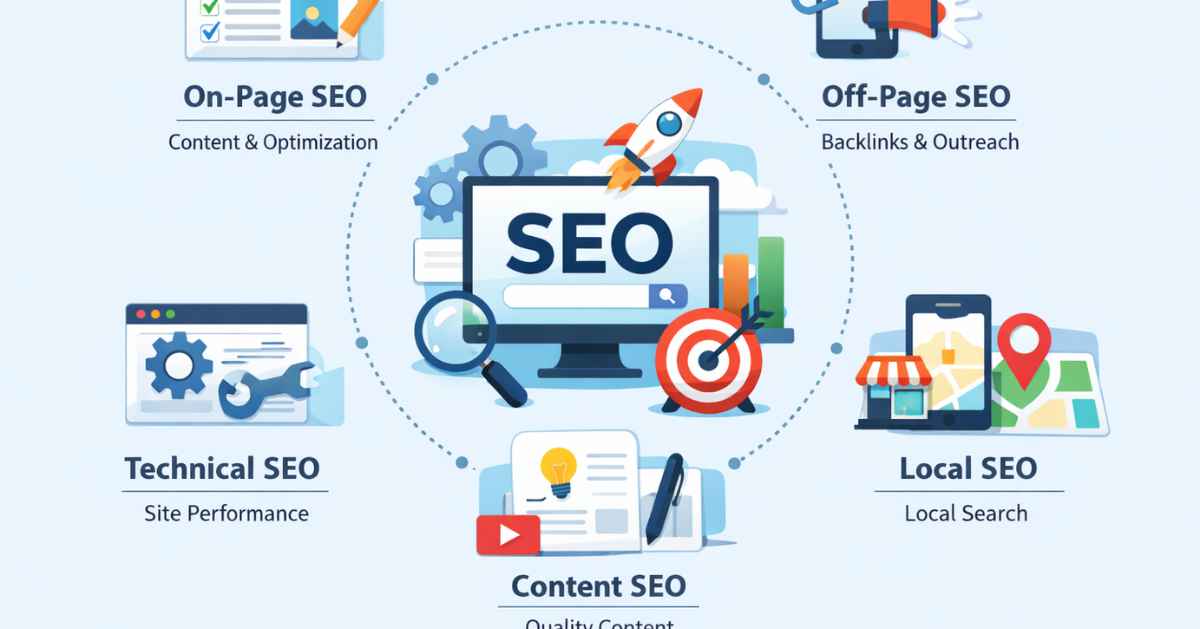
SEO is not optional in digital marketing—it’s essential. Before you start running ads, creating content, or managing social media campaigns, you must understand how different types of SEO work together. When you master on-page, off-page, technical, content, and local SEO, you gain a strong foundation that makes every digital marketing effort more powerful and profitable. Start with the basics, stay consistent, and always prioritize user experience—because that’s exactly what search engines reward in the long run.