


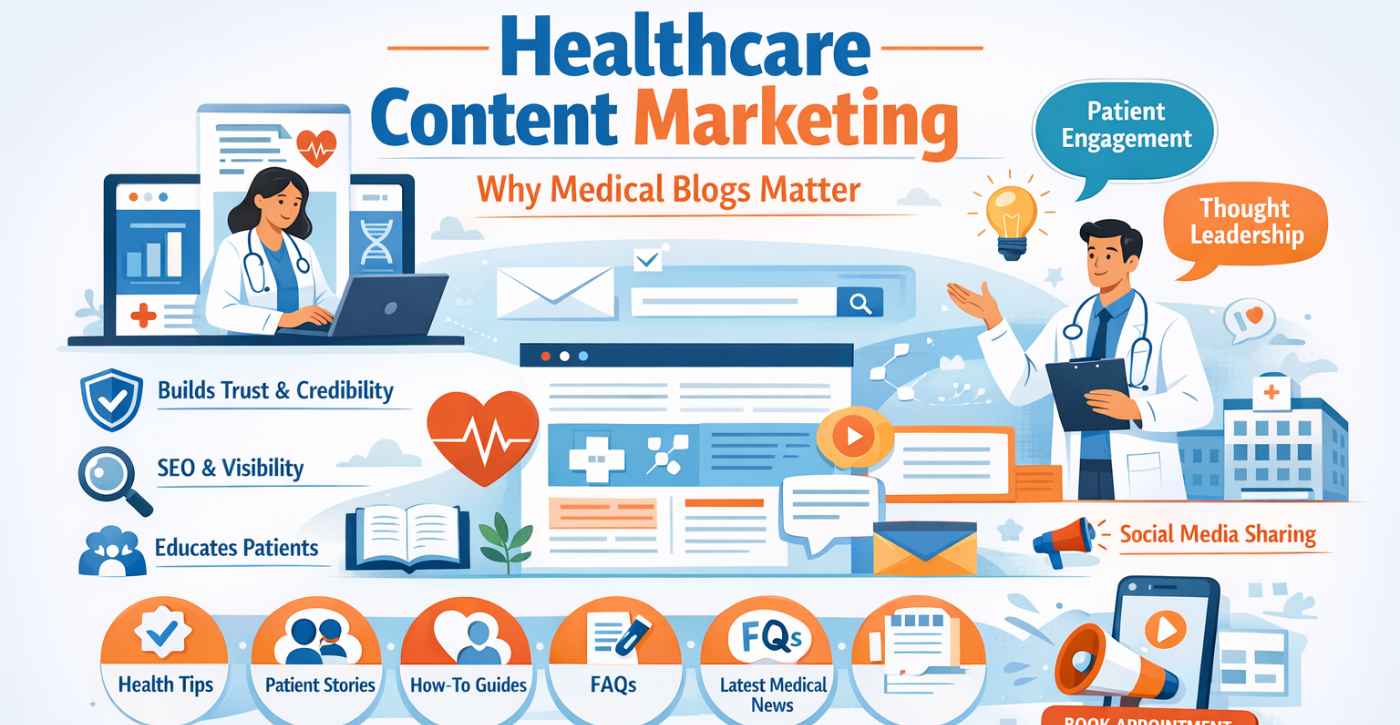
In today’s digitally driven world, healthcare organizations must go beyond traditional marketing methods to connect with patients. One of the most powerful tools in modern healthcare marketing is content marketing, particularly through medical blogs. These blogs are not just informational resources—they are strategic assets that help healthcare providers build trust, educate patients, and improve online visibility.
What Is Healthcare Content Marketing?
Healthcare content marketing refers to the creation and distribution of valuable, relevant, and accurate information to attract and engage a target audience—primarily patients, caregivers, and healthcare professionals. Unlike direct advertising, content marketing focuses on educating and informing rather than selling.
Medical blogs are a core component of this strategy. They allow healthcare providers to share insights, explain complex medical topics, and address patient concerns in a clear and accessible way.
Importance of Medical Blogs
With the rise of digital platforms, patients increasingly turn to the internet for health-related information. According to studies, a large percentage of individuals research symptoms, treatments, and healthcare providers online before making decisions.
Medical blogs serve as a reliable source of information in this landscape. They help bridge the gap between medical expertise and patient understanding, making healthcare more accessible.
Key Benefits of Medical Blogs in Healthcare Marketing
1. Builds Trust and Credibility
Trust is critical in healthcare. Patients want to feel confident in their providers. By publishing accurate, well-researched, and helpful blog content, healthcare organizations can establish themselves as authoritative sources.
When readers consistently find valuable information on your blog, they are more likely to trust your services and choose your facility when needed.
2. Improves Search Engine Visibility (SEO)
Medical blogs play a crucial role in search engine optimization (SEO). By targeting relevant keywords such as “symptoms of diabetes,” “treatment options for arthritis,” or “preventive healthcare tips,” healthcare providers can rank higher on search engines.
Regular blogging helps:
- Increase website traffic
- Improve domain authority
- Enhance keyword rankings
- Generate organic leads
The more optimized content you produce, the more opportunities you have to appear in search results when potential patients are looking for information.
3. Educates and Empowers Patients
Healthcare can be complex and overwhelming. Medical blogs simplify medical concepts, helping patients better understand their conditions and treatment options.
Educational content empowers patients to:
- Make informed decisions
- Follow treatment plans effectively
- Adopt healthier lifestyles
This not only improves patient outcomes but also strengthens the relationship between patients and providers.
4. Enhances Patient Engagement
Engaging content encourages interaction. Blogs that answer common questions, provide tips, or share patient stories can spark interest and encourage readers to spend more time on your website.
Interactive elements such as comments, social sharing, and call-to-action (CTA) buttons further enhance engagement and foster a sense of community.
5. Supports Social Media Marketing
Medical blogs provide valuable content that can be shared across social media platforms. Each blog post can be repurposed into:
- Social media posts
- Infographics
- Short videos
- Email newsletters
This multiplies your reach and ensures consistent messaging across channels.
6. Establishes Thought Leadership
Publishing high-quality blog content positions healthcare professionals as thought leaders in their field. This is especially important for specialists who want to stand out in a competitive market.
By sharing insights, research updates, and expert opinions, healthcare providers can differentiate themselves and gain recognition in their industry.
Types of Medical Blog Content
To maximize effectiveness, healthcare blogs should cover a variety of topics, including:
- Educational Articles: Explain medical conditions, symptoms, treatments, and preventive care in simple language.
- How-To Guides: Provide step-by-step instructions on managing health conditions or adopting healthy habits.
- Patient Stories: Share real-life experiences to inspire and connect with readers emotionally.
- FAQs: Answer common patient questions to address concerns and reduce uncertainty.
- Industry Updates: Keep readers informed about new treatments, technologies, and healthcare trends.
Best Practices for Creating Effective Medical Blogs
1. Focus on Accuracy and Compliance
Healthcare content must be accurate and evidence-based. Ensure that all information is reviewed by qualified professionals and complies with medical guidelines and regulations.
2. Use Simple and Clear Language
Avoid medical jargon whenever possible. Write in a way that is easy for the average reader to understand while maintaining professionalism.
3. Optimize for SEO
Use relevant keywords naturally throughout the content, including:
- Titles
- Headings
- Meta descriptions
- Image alt texts
Also, ensure your blog is mobile-friendly and loads quickly.
4. Maintain Consistency
Consistency is key to building an audience. Create a content calendar and publish blogs regularly to keep readers engaged and improve SEO performance.
5. Include Strong Calls-to-Action (CTAs)
Encourage readers to take the next step, such as:
- Booking an appointment
- Contacting your clinic
- Subscribing to a newsletter
CTAs help convert readers into patients.
Challenges in Healthcare Blogging
While medical blogs offer numerous benefits, they also come with challenges:
- Ensuring content accuracy and compliance
- Keeping up with SEO trends
- Creating engaging yet informative content
- Managing time and resources
Overcoming these challenges requires a strategic approach and collaboration between healthcare professionals and content marketers.
The Future of Healthcare Content Marketing
The future of healthcare marketing lies in personalized, data-driven content. As technology evolves, medical blogs will become even more interactive and tailored to individual patient needs.
Emerging trends include:
- AI-driven content personalization
- Voice search optimization
- Video and multimedia integration
- Patient-centric storytelling
Healthcare organizations that adapt to these trends will stay ahead in the competitive digital landscape.
[Also Read: How Patient Reviews Impact Clinic Growth]
Conclusion
Medical blogs are an essential component of healthcare content marketing. They not only improve online visibility but also build trust, educate patients, and enhance engagement.
By investing in high-quality, SEO-optimized blog content, healthcare providers can establish themselves as reliable sources of information and attract a wider audience. In an industry where trust and knowledge are paramount, medical blogs serve as a powerful tool to connect with patients and drive meaningful outcomes. Ultimately, the success of healthcare content marketing depends on delivering value—and medical blogs are one of the most effective ways to achieve that goal.