

If you want your business to appear at the top of Google Maps results, local citations are not optional—they are essential. Many businesses focus only on Google Business Profile optimization and reviews, but local citations play a silent yet powerful role in improving visibility on Maps.
In this guide, you’ll learn what local citations are, how they influence Google Maps rankings, and how to use them strategically to outrank competitors in your local area.
What Are Local Citations?
A local citation is any online mention of your business’s Name, Address, and Phone number (NAP). These mentions usually appear on:
- Business directories
- Review platforms
- Social media profiles
- Local blogs and news sites
- Industry-specific listing websites
Examples include Google Business Profile, Yelp, Justdial, Sulekha, Bing Places, and niche directories related to your industry.
Local citations help search engines verify that your business is real, trustworthy, and operating at a specific location.
Why Google Maps Rankings Matter for Local Businesses
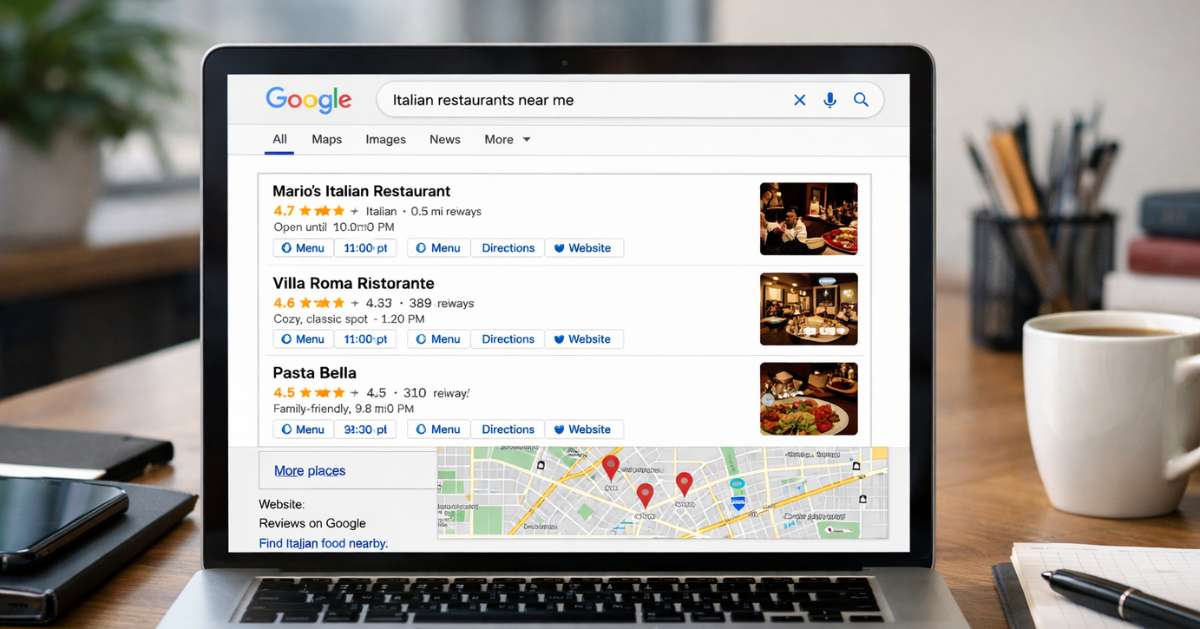
Google Maps results—often called the Local Pack—appear above organic search results. These listings attract:
- Higher click-through rates
- More phone calls
- More direction requests
- High-intent local customers
If your business ranks higher on Google Maps, you gain a competitive advantage, especially in service-based and location-dependent industries.
How Local Citations Influence Google Maps Rankings
Local citations impact Google Maps rankings in several important ways.
1. Citations Help Google Verify Your Business
Google’s primary goal is to provide accurate local results. When your business information appears consistently across multiple trusted websites, Google gains confidence that:
- Your business exists
- Your location is correct
- Your contact details are reliable
The more consistent and authoritative your citations are, the stronger your trust signals become—leading to better Maps visibility.
2. NAP Consistency Is a Core Ranking Signal
NAP consistency means your business name, address, and phone number are exactly the same everywhere online.
Even small differences like:
- “St.” vs “Street”
- Old phone numbers
- Slight name variations
can confuse search engines and weaken your local SEO strength.
Businesses with high NAP consistency across citations tend to rank higher on Google Maps because Google can confidently associate all mentions with one verified entity.
3. Citations Strengthen Local Authority and Relevance
Not all citations are equal. Google evaluates:
- Authority of the citation source
- Relevance to your business niche
- Location relevance
For example:
- A restaurant listed on food-related directories is more valuable
- A local plumber listed on city business directories gains stronger local relevance
High-quality citations signal that your business is important within a specific geographic area, which directly impacts Maps rankings.
4. Citations Support Google Business Profile Optimization
Your Google Business Profile does not work in isolation. Google cross-checks your profile data with external citations.
When citation data matches your Google Business Profile:
- Trust increases
- Ranking stability improves
- Suspension risks decrease
If there is a mismatch, your Maps rankings may drop—even if your profile is well optimized.
5. Citations Improve Map Visibility for Competitive Keywords
In competitive local markets, citations often become the deciding factor between ranking #3 and #10.
When multiple businesses have:
- Similar reviews
- Similar proximity
- Similar on-page SEO
The business with stronger citation signals usually wins higher Maps placement.
Types of Local Citations That Affect Google Maps
Understanding citation types helps you build them strategically.
Structured Citations
These appear on formal platforms with fixed business listing fields:
- Business directories
- Review platforms
- Map services
They are the most powerful for Google Maps rankings.
Unstructured Citations
These are casual mentions:
- Blog posts
- News articles
- Event pages
- Local forums
While weaker individually, they support brand authority and trust.
How Many Local Citations Do You Need?
There is no fixed number, but generally:
- Quality > Quantity
- 40–60 strong citations are enough for most local businesses
- Competitive cities may require more niche and hyperlocal citations
The goal is accuracy, relevance, and consistency, not mass submissions.
Common Citation Mistakes That Hurt Google Maps Rankings
Avoid these errors if you want stable rankings:
- Duplicate business listings
- Inconsistent NAP details
- Low-quality spam directories
- Outdated addresses or phone numbers
- Using different business names across platforms
Cleaning up bad citations is just as important as building new ones.
Best Practices to Use Local Citations for Higher Maps Rankings
Follow these proven tips:
- Start with top global and country-specific directories
- Maintain identical NAP formatting everywhere
- Update citations immediately after rebranding or relocation
- Focus on industry-specific and city-based listings
- Audit citations every 3–6 months
Consistency over time is what Google values most.
Do Local Citations Still Matter in 2026?
Yes—absolutely.
While Google has evolved with AI and entity-based search, citations remain a foundational local SEO signal. They support:
- Entity verification
- Knowledge Graph accuracy
- Local trust and relevance
Businesses that ignore citations often struggle to achieve long-term Maps stability.
Final Thoughts
Local citations may not be flashy, but they are one of the strongest ranking foundations for Google Maps. When done correctly, they help Google trust your business, confirm your location, and rank you above competitors. If you want consistent visibility, more calls, and better foot traffic, investing time in accurate, high-quality local citations is one of the smartest local SEO moves you can make.