In the world of online marketing, website traffic is one of the most important indicators of success. Whether you run a blog, an e-commerce store, or a business website, the number of visitors coming to your site determines how many leads, conversions, and sales you can generate. But not all visitors arrive in the same […]
In the world of online marketing, website traffic is one of the most important indicators of success. Whether you run a blog, an e-commerce store, or a business website, the number of visitors coming to your site determines how many leads, conversions, and sales you can generate.
But not all visitors arrive in the same way. In digital marketing, traffic is categorized into several sources based on how users discover and visit your website. Understanding the different types of traffic in digital marketing helps marketers optimize strategies, track performance, and focus on the channels that generate the best results.
In this article, we will explore the main types of website traffic, how they work, and why they are important for growing your online presence.
What Is Website Traffic in Digital Marketing?
Website traffic refers to the number of users who visit a website over a specific period of time. Each visit represents a potential customer who may interact with your content, sign up for services, or purchase products. Traffic is usually measured using analytics tools such as Google Analytics, which categorizes visitors based on their traffic source.
These sources help marketers understand:
- Where visitors are coming from
- Which marketing channels are most effective
- How users interact with the website
By analyzing traffic sources, businesses can make smarter marketing decisions.
Main Types of Traffic in Digital Marketing
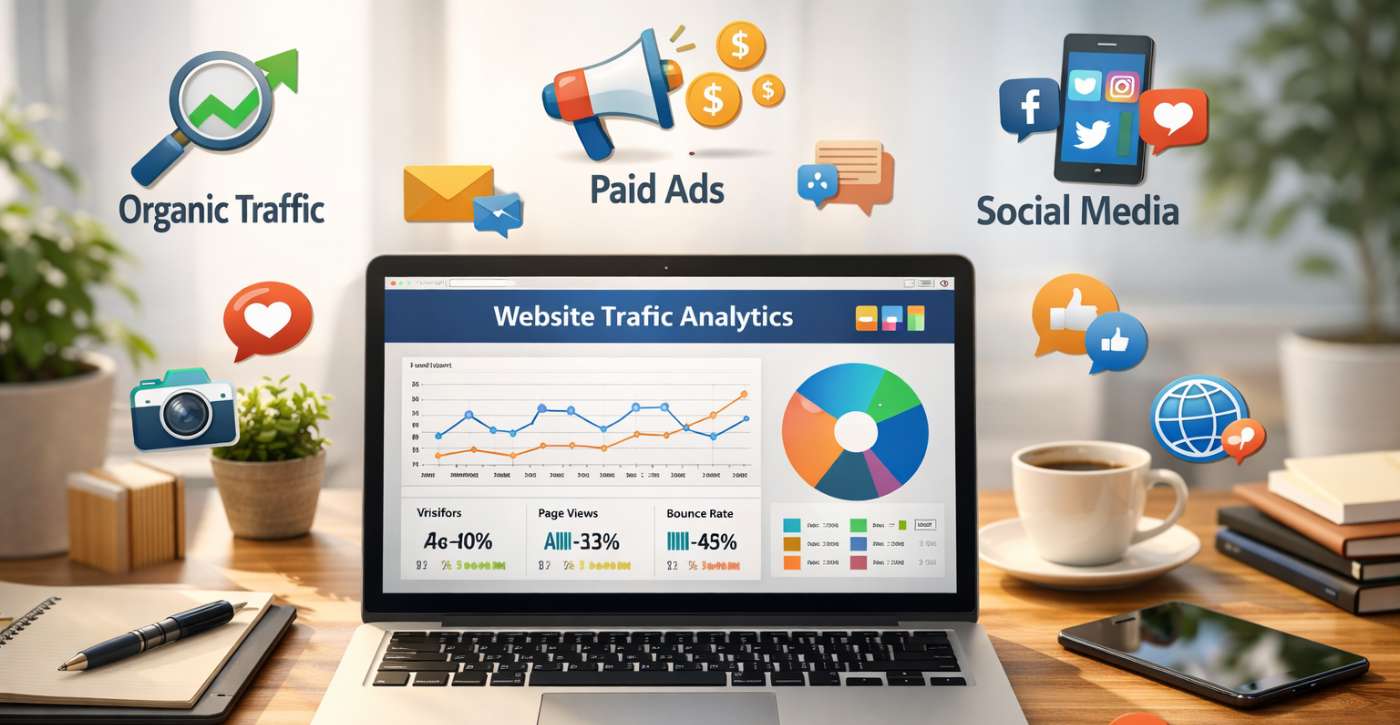
In digital marketing, there are several major traffic sources that help drive visitors to websites. These sources play an important role in increasing online visibility, attracting potential customers, and improving overall website performance. Marketers commonly use different types of traffic sources as part of their strategies to reach a wider audience, generate leads, and grow their online presence effectively. The most common types of traffic sources are widely used across various digital marketing campaigns to bring consistent and targeted visitors to websites.
1. Organic Traffic
Organic traffic refers to the visitors who reach a website through search engines such as Google, Bing, or Yahoo without clicking on paid advertisements. This type of traffic occurs when users search for information and select a website from the unpaid search results. For example, if someone searches for “best hair extensions guide” and clicks on a blog post that appears in the search results, that visit is considered organic traffic.
Key Features of Organic Traffic
- Comes from search engine results pages (SERPs)
- Generated through search engine optimization (SEO)
- Free but requires time and effort to build
- Highly targeted because users are actively searching for information
[Read More: What Are the Main Pillars of Digital Marketing?]
How to Increase Organic Traffic
- Optimize blog posts with SEO keywords
- Publish high-quality content regularly
- Improve website loading speed
- Build backlinks from reputable websites
Organic traffic is often considered the most valuable traffic source because it brings long-term and sustainable results.
2. Paid Traffic
Paid traffic refers to the visitors who come to a website through paid advertising campaigns. Businesses invest money in different online advertising platforms to attract potential customers and increase their website visibility. This type of traffic is commonly generated through channels such as search engine ads, social media advertisements, and display networks. By using paid traffic strategies, businesses can quickly reach targeted audiences, promote their products or services, and drive more visitors to their websites.
Common paid advertising platforms include:
- Google Ads
- Facebook Ads
- Instagram Ads
- LinkedIn Ads
- YouTube Ads
Benefits of Paid Traffic
- Immediate website visibility
- Targeted audience selection
- Fast results for new websites
- Scalable marketing campaigns
However, once you stop paying for ads, the traffic also stops. This is why paid traffic is often used alongside organic marketing strategies.
3. Direct Traffic
Direct traffic refers to visitors who reach your website by typing the URL directly into their browser or by using a saved bookmark. This type of traffic typically comes from users who are already familiar with your brand or website, indicating a level of brand awareness and trust. Since these users intentionally navigate to your site without relying on search engines or external links, direct traffic is often considered a sign of strong brand recognition and returning visitors.
Examples of Direct Traffic
- Typing a website address into the browser
- Clicking a saved bookmark
- Visiting from a link in a document or PDF
Why Direct Traffic Is Important
Direct traffic is a strong indicator of brand awareness and visitor loyalty. When users remember your website and choose to visit it directly instead of finding it through search engines or other sources, it shows that your brand has built credibility and recognition. This type of traffic reflects the trust users have in your website and highlights the effectiveness of your brand presence in the minds of your audience.
Businesses often increase direct traffic through:
- Brand marketing
- Offline advertising
- Email campaigns
- Word-of-mouth promotion
4. Referral Traffic
Referral traffic refers to visitors who arrive at your website by clicking links from other websites. When another website, such as a blog or an online article, includes a link to your site and a user clicks on that link to visit your page, the visit is recorded as referral traffic. This type of traffic helps bring new visitors to your website through external sources and indicates that other websites are directing their audience to your content.
Common Sources of Referral Traffic
- Guest blogging
- Online directories
- Forum discussions
- Blog comments
- News websites
- Industry partnerships
Benefits of Referral Traffic
Referral traffic helps improve:
- Website visibility
- Domain authority
- Search engine rankings
Building high-quality backlinks from relevant websites is one of the most effective ways to increase referral traffic.
5. Social Media Traffic
Social traffic refers to the visitors who reach your website through social media platforms. When users click on links shared on social networks such as Facebook, Instagram, Twitter, or LinkedIn, they are directed to your website, which generates social traffic. This type of traffic is important for increasing brand visibility, engaging with audiences, and driving potential customers to your online content.
Popular Social Traffic Platforms
- Facebook
- Instagram
- Twitter (X)
- LinkedIn
- Pinterest
- TikTok
Strategies to Increase Social Traffic
- Share engaging blog content
- Create short-form videos and reels
- Use trending hashtags
- Encourage content sharing
- Post consistently
Social media is one of the fastest ways to drive traffic and build an online community around your brand.
6. Email Traffic
Email traffic is generated through email marketing campaigns in which businesses send newsletters, promotional offers, and educational content to their subscribers. These emails contain links that direct users to the company’s website, encouraging recipients to click and visit the site to learn more about products, services, or valuable information shared in the campaign.
Advantages of Email Traffic
- Highly targeted audience
- High conversion rates
- Strong customer relationships
- Direct communication with subscribers
Email marketing remains one of the most effective digital marketing channels for driving repeat website visitors.
7. Display Traffic
Display traffic refers to visitors who arrive at a website through banner advertisements displayed on various online platforms such as websites, mobile apps, or other digital networks. These visual ads are designed to attract users’ attention and encourage them to click, directing them to the advertiser’s website or landing page. Display traffic is commonly used in digital marketing to increase brand awareness, promote products or services, and reach a broader online audience.
These visual ads appear in different formats, including:
- Banner ads
- Image ads
- Video ads
- Interactive ads
Display advertising is commonly used for brand awareness campaigns and retargeting users who previously visited a website.
Why Understanding Traffic Types Is Important
Knowing the different types of website traffic helps businesses create a more effective and balanced digital marketing strategy. By understanding where their visitors are coming from—such as organic search, paid ads, social media, referrals, or direct visits—businesses can evaluate which channels are performing well and which need improvement. This insight allows marketers to allocate budgets more efficiently, optimize campaigns, improve audience targeting, and ultimately increase conversions and overall website performance.
- Better Marketing Decisions: Marketers can identify which channels generate the best results and allocate resources accordingly.
- Improved SEO Strategy: Understanding organic traffic helps improve search engine optimization and content marketing.
- Higher Conversion Rates: Targeted traffic sources often lead to better engagement and higher conversions.
- Data-Driven Growth: Analytics tools allow businesses to track traffic performance and adjust strategies for maximum growth.
Best Strategy: Combining Multiple Traffic Sources
Successful digital marketing does not rely on just one traffic source; instead, it works best when businesses use a combination of multiple channels to reach their audience. By integrating different strategies such as search engine optimization, social media marketing, email campaigns, and paid advertising, companies can expand their reach, attract diverse audiences, and improve overall performance. Using multiple traffic sources also reduces the risk of depending on a single platform and helps create a more stable and effective marketing strategy that maximizes results.
A balanced strategy may include:
- SEO for organic traffic
- Paid ads for quick results
- Social media for engagement
- Email marketing for repeat visitors
- Referral links for authority building
Diversifying traffic sources helps reduce risk and ensures consistent website growth.
Conclusion
Understanding the different types of traffic in digital marketing is essential for building a successful online presence. Each traffic source—organic, paid, direct, referral, social, email, and display—plays a unique role in attracting visitors and growing your website.
While paid traffic provides quick visibility, organic traffic delivers long-term value. Social media and email marketing help build relationships, while referral links increase authority and credibility. By combining these traffic sources and continuously analyzing performance, businesses can create a powerful digital marketing strategy that drives consistent traffic, leads, and conversions.