Search Engine Marketing (SEM) is one of the most powerful digital marketing strategies used by businesses to promote their websites on search engines like Google and Bing. In today’s digital world, where millions of people search online every day, businesses must appear in search results to attract customers. SEM helps companies gain visibility, drive targeted […]
Search Engine Marketing (SEM) is one of the most powerful digital marketing strategies used by businesses to promote their websites on search engines like Google and Bing. In today’s digital world, where millions of people search online every day, businesses must appear in search results to attract customers. SEM helps companies gain visibility, drive targeted traffic, and generate leads or sales quickly.
What Is Search Engine Marketing?
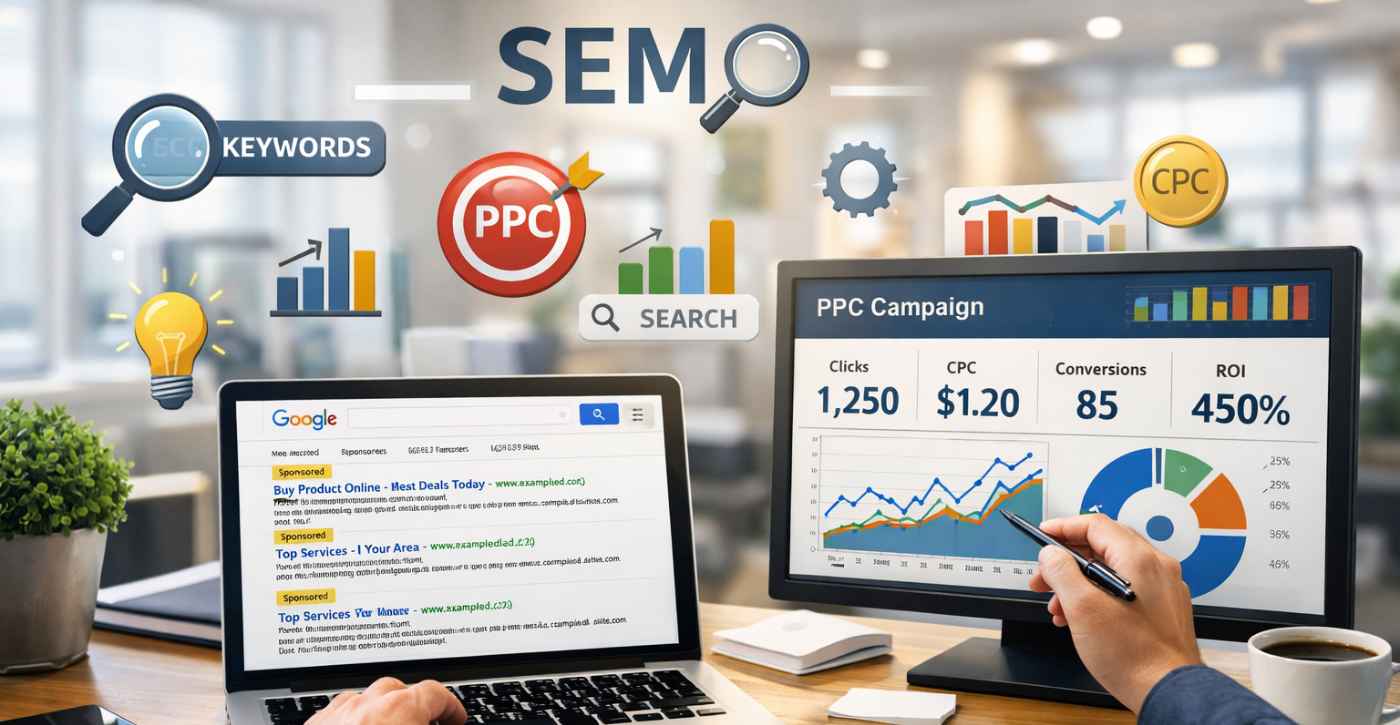
Search Engine Marketing (SEM) is a digital marketing technique used to increase a website’s visibility on search engine results pages (SERPs) through paid advertising and optimization strategies. SEM mainly involves pay-per-click (PPC) advertising, where businesses pay search engines to display their ads when users search for specific keywords.
For example, if someone searches for “best orthopedic hospital in Hyderabad,” the top results labeled “Sponsored” or “Ad” are typically SEM advertisements. These ads appear above or below organic search results and help businesses reach potential customers who are actively searching for related products or services.
How Search Engine Marketing Works
Search Engine Marketing (SEM) operates through a bidding system where advertisers select keywords related to their products or services. These keywords are the terms that users typically search for on search engines like Google. Advertisers compete by placing bids on these keywords so their ads can appear in the search results. The higher the bid and the better the ad quality, the greater the chances of the ad appearing at the top of the search results.
The process usually involves the following steps:
1. Keyword Research
Keyword research is the process of identifying the words and phrases that potential customers use when searching online. Businesses analyze these search terms to understand user intent and market demand. This helps them target the right audience and create content or ads that appear in relevant search results.
Example keywords:
- Best digital marketing course
- Orthopedic hospital near me
- Affordable web design services
These keywords become the foundation of SEM campaigns.
2. Creating Ads
Advertisers create text-based ads to promote their products or services on search engines and other platforms. These ads usually contain a headline, a short description, and a display URL that directs users to the advertiser’s website. The goal of these ads is to attract users’ attention and encourage them to click for more information or make a purchase.
3. Keyword Bidding
Advertisers choose the maximum amount they are willing to pay for each click on their ad, which is known as Cost Per Click (CPC). When users perform a search, search engines conduct an automated auction among advertisers targeting those keywords. Based on factors like bid amount and ad quality, the system decides which ads appear and their position on the search results page.
4. Ad Auction
When a user searches for a keyword, search engines run an ad auction to decide which ads will appear in the results. Ads with the best combination of these factors are shown to the user in higher positions.
- Bid amount
- Ad relevance
- Landing page quality
- Expected click-through rate
The best-performing ads appear at the top of search results.
5. User Click and Conversion
When users click on an advertisement, they are redirected to a dedicated landing page designed to capture their interest. If the landing page is properly optimized with relevant content and a clear call-to-action, it encourages visitors to engage with the offer. As a result, users may take desired actions such as signing up, making a purchase, or filling out a form, leading to higher conversions.
- Filling a form
- Making a purchase
- Booking a service
This action is called a conversion.
Types of Search Engine Marketing
Search Engine Marketing (SEM) includes various advertising formats that help businesses reach potential customers through search engines. These formats allow advertisers to target users based on their search queries, interests, and online behavior. By using different ad types, businesses can effectively increase visibility, drive traffic, and improve conversions.
1. Search Ads
Search ads are displayed on search engine results pages when users search for specific keywords or phrases. These advertisements are typically text-based and are designed to match the user’s search intent. They usually appear at the top of the search results, above the organic listings, making them highly visible to potential customers.
Example:
Ad:
“Digital Marketing Agency – Get More Leads Today”
2. Display Ads
Display ads are visual advertisements, usually in the form of banners or graphics, that appear on websites, mobile apps, and blogs. These ads are shown across a search engine’s advertising network to reach users while they browse different online platforms. They help businesses promote their products or services visually and attract potential customers’ attention.
They include:
- Images
- Graphics
- Videos
- Interactive banners
Display ads help businesses increase brand awareness.
3. Shopping Ads
Shopping ads are primarily used by eCommerce businesses to promote their products online. These ads display product images, prices, and store information directly in search results. They help businesses attract potential customers who are actively searching for products to purchase.
These ads display:
- Product image
- Price
- Store name
- Product description
Example: Searching “wireless headphones” shows shopping ads with product images and prices.
4. Video Ads
Video ads appear on platforms like YouTube and other partner websites, allowing businesses to reach a wide online audience. They use engaging visuals, sound, and storytelling to capture viewers’ attention effectively. This format helps brands communicate their message clearly while creating a memorable experience for potential customers.
5. Remarketing Ads
Remarketing focuses on users who have already visited your website but did not complete a desired action, such as making a purchase or filling out a form. It allows businesses to reconnect with these potential customers through targeted ads. This strategy helps increase conversions by reminding and encouraging users to return and take action.
For example:
- A user visits your website
- Leaves without buying
- Later sees your ad on other websites
Remarketing helps bring users back and increase conversions.
Benefits of Search Engine Marketing
Search Engine Marketing (SEM) provides numerous benefits for businesses of all sizes by increasing their online visibility and reaching potential customers quickly. It allows companies to target specific audiences based on keywords, location, and user behavior, making marketing efforts more effective.
1. Immediate Results:
Unlike SEO, which usually takes time to show results, Search Engine Marketing (SEM) can drive traffic almost immediately after launching ad campaigns. Once the ads go live, businesses can start appearing in search results right away.
2. Highly Targeted Audience
Search Engine Marketing (SEM) allows advertisers to reach potential customers by targeting specific audiences online. It enables businesses to display ads based on user search queries, ensuring the ads appear when people are actively looking for related products or services.
- Keywords
- Location
- Device
- Language
- Demographics
- Interests
3. Measurable Performance
Search Engine Marketing (SEM) platforms offer detailed analytics that help marketers track the performance of their campaigns effectively. These analytics provide insights into key metrics such as clicks, impressions, conversions, and return on investment. By analyzing this data, businesses can optimize their advertising strategies and improve overall campaign performance.
- Click-through rate (CTR)
- Conversion rate
- Cost per click (CPC)
- Return on ad spend (ROAS)
4. Cost Control
Advertisers can easily manage and control their advertising expenses by setting specific budget limits for their campaigns. They have the flexibility to decide how much they want to spend daily or over the entire campaign duration. This helps ensure that advertising costs stay within their financial plan while still reaching the desired audience.
- Setting daily limits
- Adjusting bids
- Pausing campaigns anytime
5. Increased Brand Visibility
Even when users don’t click on ads, appearing at the top of search results still improves brand visibility. Consistent presence in search results helps people become familiar with the brand. Over time, this repeated exposure builds trust and strengthens brand recognition among potential customers.
[Also Read: What Are The Types of SEO in Digital Marketing]
Popular Search Engine Marketing Platforms
Several platforms provide businesses with the opportunity to run Search Engine Marketing (SEM) campaigns effectively. These platforms help companies promote their products or services by displaying ads on search engines and partner websites. By using SEM platforms, businesses can reach targeted audiences, increase visibility, and drive more traffic to their websites.
1. Google Ads
Google Ads is the largest and most widely used platform for search engine marketing (SEM). It enables businesses to promote their products and services by displaying ads on Google search results and across its advertising network.
It allows advertisers to run:
- Search ads
- Display ads
- Shopping ads
- YouTube ads
Because Google handles billions of searches daily, it provides massive reach.
2. Microsoft Advertising:
Microsoft Advertising helps businesses promote their products and services across a large network of search engines and websites. It allows advertisers to reach potential customers who are actively searching for related products or services online.
Although it has smaller traffic compared to Google, competition is often lower, making ads cheaper.
3. Amazon Advertising
For eCommerce brands selling products on Amazon, the platform offers powerful advertising options to increase product visibility. Sellers can use sponsored product listings to promote individual products directly in search results.
Key Components of a Successful SEM Campaign
1. Keyword Strategy : Choosing the right keywords is a crucial step in any successful digital marketing strategy. The keywords you select help search engines understand your content and connect it with the right audience.
Types of keywords include:
- Broad match
- Phrase match
- Exact match
- Negative keywords
Using negative keywords prevents ads from showing for irrelevant searches.
2. Ad Copy Optimization: Ad copy optimization focuses on making your ad text clear, engaging, and persuasive for the target audience. A well-written ad copy should highlight the main benefit of the product or service while encouraging users to take action.
Effective ads include:
- Strong headline
- Clear value proposition
- Action-oriented CTA
Example CTA: “Get Free Consultation Today.”
3. Landing Page Optimization: The landing page should clearly reflect the message shown in the advertisement to maintain consistency and relevance for users. When visitors click on the ad, they should immediately see the same information, offer, or value that was promised.
A good landing page should include:
- Clear headline
- Relevant content
- Fast loading speed
- Mobile responsiveness
- Strong call-to-action
4. Bid Management: Adjusting bids based on keyword performance is an effective way to improve return on investment (ROI) in digital advertising. Marketers typically analyze which keywords generate the most conversions and increase bids on those high-performing keywords to gain more visibility.
Best Practices for Search Engine Marketing
- Focus on High-Intent Keywords: Target keywords that indicate buying intent are search terms used by people who are ready to make a purchase or take action.
- Use Ad Extensions: Ad extensions enhance the visibility of ads by providing extra information that makes them more useful to users. They can include details such as phone numbers, locations, additional links, and pricing information.
- Optimize for Mobile Users: Most online searches now happen on smartphones, so it’s essential to make sure your ads and landing pages are fully mobile-friendly for a smooth user experience. Additionally, performing A/B testing helps marketers understand which ad variations perform best.
- Monitor and Improve Campaigns: Regularly analyzing campaign performance helps identify what strategies are working and what needs improvement. By optimizing campaigns based on data and insights, businesses can enhance their marketing effectiveness.
Common Mistakes to Avoid in SEM
Many beginners often make mistakes that reduce the effectiveness of their Search Engine Marketing (SEM) campaigns. These mistakes usually happen because of a lack of experience, poor keyword selection, or not understanding how ad platforms work. As a result, their campaigns may fail to reach the right audience and deliver the expected results.
Some common errors include:
- Targeting too many broad keywords
- Ignoring negative keywords
- Poor landing page experience
- Not tracking conversions
- Setting unrealistic budgets
Avoiding these mistakes can significantly improve campaign performance.
The Future of Search Engine Marketing
Search Engine Marketing (SEM) continues to evolve as technology advances and digital platforms become more sophisticated. Modern tools, automation, and artificial intelligence are transforming how businesses create, manage, and optimize their advertising campaigns. These innovations enable marketers to target the right audience more accurately and measure campaign performance in real time.
Key trends shaping SEM include:
- AI-powered ad optimization
- Voice search advertising
- Automation in bidding strategies
- Improved audience targeting
Businesses that adopt these innovations will stay ahead in the competitive digital marketing landscape.
Conclusion
Search Engine Marketing (SEM) is a powerful strategy that helps businesses increase visibility, attract targeted traffic, and generate leads through paid advertising on search engines. By combining effective keyword research, compelling ad copy, optimized landing pages, and continuous performance monitoring, businesses can achieve excellent results from SEM campaigns. While SEO provides long-term organic growth, SEM delivers immediate traffic and measurable outcomes, making it an essential part of any modern digital marketing strategy.