


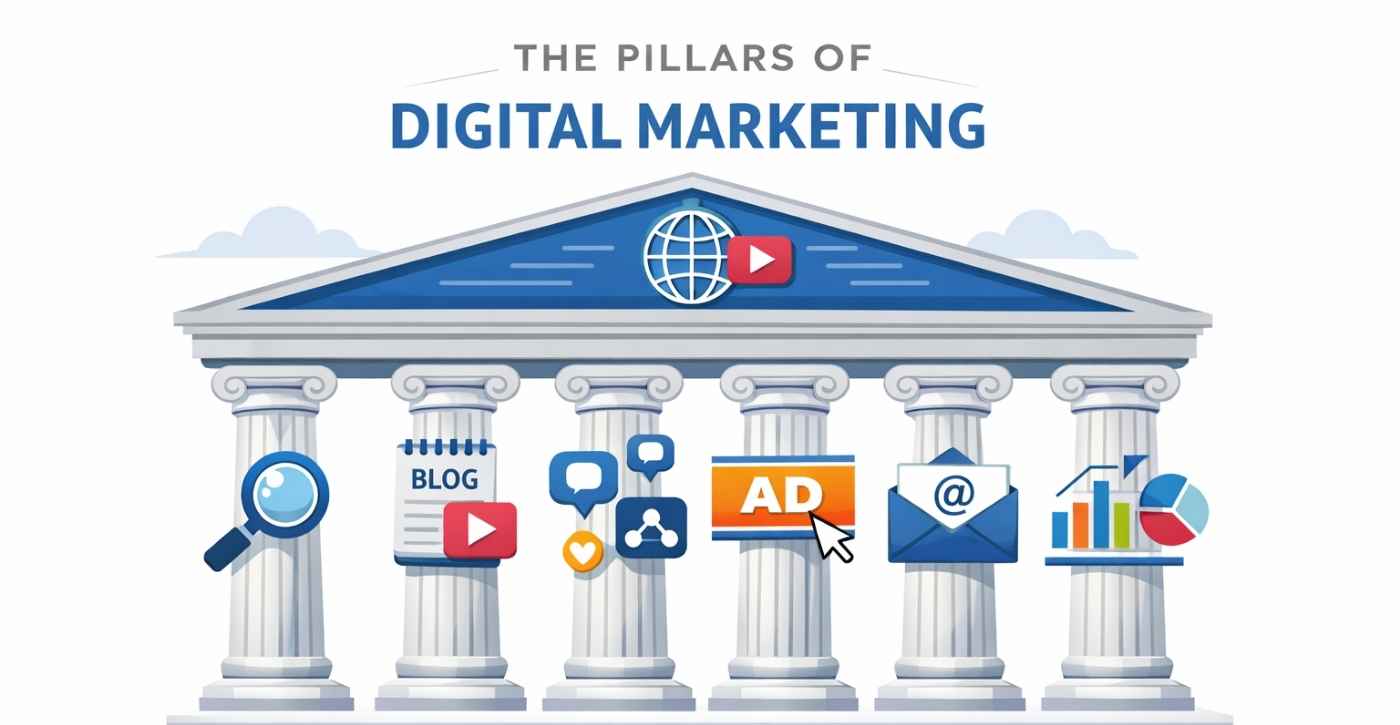
In today’s fast-paced digital world, businesses can no longer rely only on traditional marketing methods. Customers search online, compare brands on social media, read reviews, and expect personalized communication. This is where digital marketing comes into play. To succeed online, marketers follow a structured approach built around the main pillars of digital marketing.
Understanding these pillars helps businesses create strong strategies, reach the right audience, and achieve long-term growth. Whether you are a beginner, a business owner, or a marketing professional, knowing these pillars is essential.
What Are Digital Marketing Pillars?
The pillars of digital marketing are the core components or channels that support a complete online marketing strategy. Each pillar has a specific role, but when combined, they work together to attract, engage, convert, and retain customers.
Think of digital marketing like a building. If one pillar is weak or missing, the entire structure becomes unstable. A successful digital marketing strategy depends on balancing all major pillars effectively.
1. Search Engine Optimization (SEO)
Search Engine Optimization (SEO) is one of the most important pillars of digital marketing, focusing on improving a website’s visibility on search engines such as Google. The main goal of SEO is to help websites appear higher in organic (non-paid) search results when users search for relevant information, products, or services. By optimizing different elements of a website, including content, keywords, technical structure, and backlinks, SEO helps attract more relevant visitors, increase website traffic, and improve online presence without relying on paid advertisements.
Key Elements of SEO:
- On-Page SEO: On-page SEO involves optimizing content, keywords, headings, URLs, and meta tags to improve a webpage’s visibility in search engines. It helps search engines understand the page better and improves rankings and user experience.
- Off-Page SEO: Off-page SEO focuses on building backlinks, brand mentions, and online authority from external websites. These signals help search engines trust your site and improve its ranking and credibility.
- Technical SEO: Technical SEO focuses on improving website speed, mobile-friendliness, indexing, and overall site structure to help search engines crawl and rank the site effectively. It ensures a smooth user experience while making the website easily accessible and understandable for search engines.
SEO is a long-term strategy that builds trust and credibility. When done correctly, it drives high-quality traffic and delivers consistent results over time.
2. Content Marketing
Content marketing is the backbone of digital marketing, focusing on the creation and distribution of valuable, relevant, and engaging content to attract and retain a clearly defined target audience. Instead of directly promoting products or services, it aims to provide useful information that builds trust, strengthens brand awareness, and encourages long-term relationships with potential customers. By consistently delivering high-quality content that addresses the needs and interests of the audience, businesses can drive meaningful engagement and support their overall marketing goals.
Types of Content Marketing:
- Blog posts and articles
- Videos and reels
- Infographics
- Ebooks and guides
- Case studies
Good content educates users, solves problems, and builds brand authority. Content marketing also supports other pillars like SEO, social media, and email marketing, making it a central element of any digital strategy.
3. Social Media Marketing (SMM)
Social media marketing focuses on promoting brands through popular platforms such as Facebook, Instagram, LinkedIn, X (Twitter), and YouTube. It enables businesses to reach a wider audience and build meaningful relationships with their customers. By sharing engaging content, interacting with followers, and running targeted campaigns, businesses can connect with their audience on a more personal level, increase brand awareness, and drive growth.
Benefits of Social Media Marketing:
- Increased brand awareness
- Direct customer engagement
- Community building
- Traffic generation
- Lead generation
Social media includes both organic marketing (posts, stories, engagement) and paid advertising. A strong social media presence improves brand trust and customer loyalty.
4. Paid Advertising (PPC – Pay Per Click)
Paid advertising is a powerful pillar of digital marketing that helps businesses achieve quick and measurable results. One of the most popular forms of paid advertising is Pay-Per-Click (PPC), where advertisers place ads on various online platforms and pay only when users click on those ads. This model allows businesses to drive targeted traffic to their websites while maintaining control over their advertising budget, making it an effective strategy for increasing visibility, generating leads, and improving overall marketing performance.
Common Paid Advertising Channels:
- Search ads
- Display ads
- Social media ads
- Remarketing campaigns
Paid ads are ideal for promotions, product launches, and competitive markets. When combined with SEO and content marketing, paid advertising can significantly boost visibility and conversions.
5. Email Marketing
Email marketing is one of the highest ROI pillars in digital marketing. It involves sending targeted and personalized emails to subscribers with the goal of nurturing leads, building trust, and maintaining long-term relationships with customers. Through consistent communication, businesses can share valuable content, promote products or services, and keep their audience engaged, ultimately driving conversions and customer loyalty.
Why Email Marketing Matters:
- Personalized communication
- High conversion potential
- Cost-effective marketing
- Automation and scalability
Email campaigns can include newsletters, promotional offers, product updates, and follow-ups. With automation and personalization, email marketing helps guide users through the buyer’s journey.
[Also Read: How to Choose the Right Branding Agency for Your Business]
6. Analytics and Data Tracking
Analytics is the foundation that measures the success of all digital marketing efforts. It provides valuable insights into how campaigns are performing, how users interact with content, and which strategies deliver the best results. By analyzing data, marketers can make informed decisions, optimize their campaigns, and allocate resources more effectively. Without analytics and data-driven insights, marketing decisions rely largely on guesswork, which can lead to ineffective strategies and missed opportunities for growth.
Key Metrics Tracked:
- Website traffic
- Conversion rates
- Click-through rates (CTR)
- Bounce rate
- ROI
Analytics tools help marketers understand user behavior, identify what works, and optimize campaigns for better performance. Data-driven marketing leads to smarter decisions and higher profitability.
7. Conversion Rate Optimization (CRO)
Conversion Rate Optimization (CRO) focuses on increasing the percentage of website visitors who complete a desired action. These actions can include filling out a form, making a purchase, subscribing to a newsletter, or performing any other goal that benefits the business. By analyzing user behavior and improving website design, content, and user experience, CRO helps businesses convert more visitors into customers or leads, ultimately maximizing the effectiveness of their online presence.
CRO Techniques:
- A/B testing
- Better landing page design
- Clear call-to-action (CTA)
- Improved user experience
CRO ensures that the traffic generated through other digital marketing pillars is converted into real business results.
How These Pillars Work Together
The real power of digital marketing lies in integration, where multiple strategies work together to achieve better results. SEO helps drive organic traffic to a website, while high-quality content builds trust and credibility with the audience. Social media platforms engage users and strengthen brand presence, and paid advertising increases visibility to reach a wider audience quickly. At the same time, email marketing nurtures leads and maintains relationships with potential customers.
When all pillars are aligned, businesses achieve:
- Strong online presence
- Consistent lead generation
- Higher sales and revenue
- Long-term brand growth
Conclusion
The main pillars of digital marketing—SEO, content marketing, social media marketing, paid advertising, email marketing, analytics, and CRO—form the foundation of any successful online strategy. Ignoring even one pillar can limit growth and reduce results.
For businesses and marketers, mastering these pillars is not optional—it is essential. By understanding and implementing each pillar correctly, you can build a powerful digital presence and stay competitive in the digital age.