

In today’s digital-first world, the real estate industry has undergone a significant transformation. Buyers and renters no longer rely solely on physical visits to evaluate properties. Instead, they turn to immersive online experiences that allow them to explore spaces from the comfort of their homes. One of the most powerful tools driving this shift is the virtual tour.
Virtual tours are not just a trend—they are a proven strategy to boost engagement, attract qualified leads, and ultimately improve property conversions. In this article, we’ll explore how virtual tours work, why they are effective, and how they can significantly enhance your real estate marketing strategy.
What Are Virtual Tours in Real Estate?
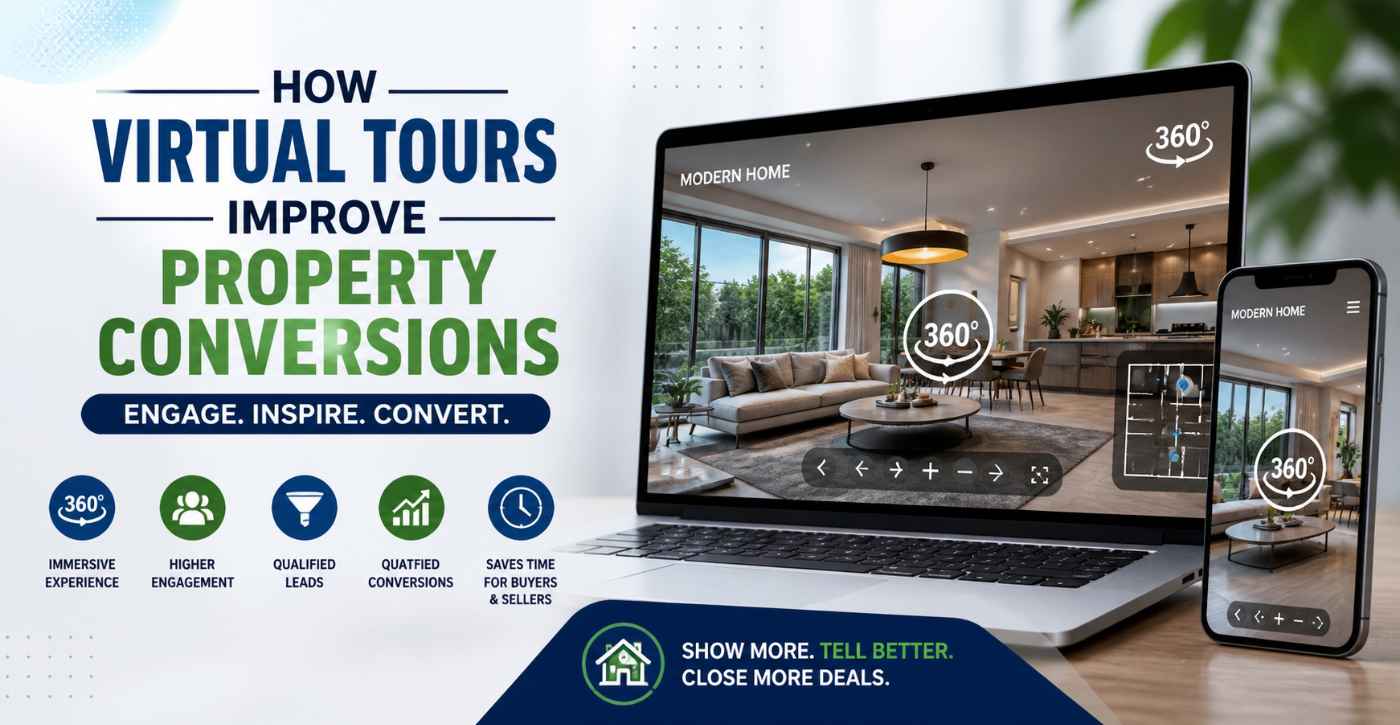
A virtual tour is a digital simulation of a property that allows users to navigate through it online. These tours can include 360-degree images, videos, interactive floor plans, and even augmented or virtual reality experiences. Unlike static images, virtual tours provide a more immersive and realistic sense of space.
Potential buyers can walk through rooms, zoom in on details, and get a comprehensive understanding of the layout—all without stepping foot inside the property.
Why Virtual Tours Matter for Property Conversions
1. Enhanced User Engagement
Virtual tours capture attention far more effectively than traditional photos or text descriptions. When users can interact with a property, they tend to spend more time exploring it. Increased engagement directly correlates with higher conversion rates.
Instead of quickly scrolling through listings, visitors become active participants, which builds a stronger emotional connection with the property.
2. Builds Trust and Transparency
One of the biggest challenges in real estate is building trust with potential buyers. Virtual tours provide a transparent view of the property, reducing uncertainty and skepticism.
When buyers feel confident that what they see online accurately reflects reality, they are more likely to take the next step—whether that’s scheduling a visit or making an offer.
3. Attracts High-Intent Buyers
Virtual tours act as a filtering mechanism. Casual browsers may view photos, but serious buyers are more likely to engage with a full tour.
By the time a lead contacts you, they already have a clear understanding of the property, making them more qualified and more likely to convert.
4. Saves Time for Buyers and Sellers
Virtual tours reduce the need for multiple physical visits. Buyers can shortlist properties online, and sellers can avoid unnecessary showings.
This efficiency speeds up the decision-making process and helps close deals faster, ultimately improving conversion rates.
5. Expands Reach to Remote Buyers
With virtual tours, geographical boundaries disappear. Buyers from different cities—or even countries—can explore properties without traveling.
This expanded reach increases the pool of potential buyers, which significantly improves the chances of conversion.
SEO Benefits of Virtual Tours
Incorporating virtual tours into your property listings doesn’t just help with conversions—it also boosts your search engine rankings.
1. Increased Time on Site: Search engines consider user engagement metrics like time spent on a page. Virtual tours encourage visitors to stay longer, signaling that your content is valuable and relevant.
2. Lower Bounce Rates: Interactive content reduces bounce rates because users are more likely to explore multiple sections of your website instead of leaving quickly.
3. Rich Media Content Advantage: Websites with diverse content types—such as videos and interactive elements—tend to rank higher. Virtual tours add depth to your listings, making them more appealing to both users and search engines.
4. Improved Click-Through Rates: Listings that mention “virtual tour available” often attract more clicks. This increased traffic can lead to higher conversions over time.
How Virtual Tours Influence Buyer Psychology
Understanding buyer behavior is key to improving conversions. Virtual tours tap into several psychological triggers:
- Sense of ownership: When users navigate a property themselves, they begin to imagine living there.
- Emotional connection: Immersive experiences create stronger emotional responses than static images.
- Reduced uncertainty: Seeing every angle of a property minimizes doubts and objections.
These factors collectively push buyers closer to making a decision.
Types of Virtual Tours You Can Use
1. 360-Degree Tours: These are the most common and cost-effective option. Users can rotate the view and explore each room in detail.
2. Video Walkthroughs: Guided video tours provide a curated experience, highlighting key features of the property.
3. 3D Virtual Tours: Advanced 3D tours allow users to move through spaces as if they were physically present.
4. Virtual Reality (VR) Experiences: For a premium experience, VR tours offer complete immersion using headsets.
Best Practices for Creating High-Converting Virtual Tours
To maximize the effectiveness of your virtual tours, follow these best practices:
1. Use High-Quality Visuals: Ensure that images and videos are clear, well-lit, and professionally captured.
2. Highlight Key Features: Focus on unique selling points such as spacious rooms, modern kitchens, or scenic views.
3. Optimize for Mobile Devices: Many users browse properties on their smartphones, so your virtual tours must be mobile-friendly.
4. Include Clear Call-to-Actions (CTAs): Guide users on what to do next—whether it’s booking a visit, contacting an agent, or requesting more information.
5. Integrate with Listings: Make sure your virtual tours are easily accessible within your property listings and not hidden away.
The Future of Virtual Tours in Real Estate
As technology continues to evolve, virtual tours are becoming more sophisticated. Artificial intelligence, augmented reality, and interactive customization options are shaping the future of property viewing.
Buyers may soon be able to modify interiors, change furniture layouts, or visualize renovations—all within a virtual environment.
Real estate professionals who adopt these innovations early will have a significant competitive advantage.
[Also Read: Social Media Advertising for Real Estate Projects ]
Conclusion
Virtual tours are no longer optional—they are essential for modern real estate marketing. By offering an immersive, transparent, and convenient way to explore properties, virtual tours significantly improve user engagement and attract high-quality leads.
From boosting SEO performance to enhancing buyer confidence, the benefits are undeniable. When implemented correctly, virtual tours can dramatically increase property conversions and help you close deals faster. If you’re looking to stay ahead in the competitive real estate market, investing in virtual tour technology is one of the smartest moves you can make.