


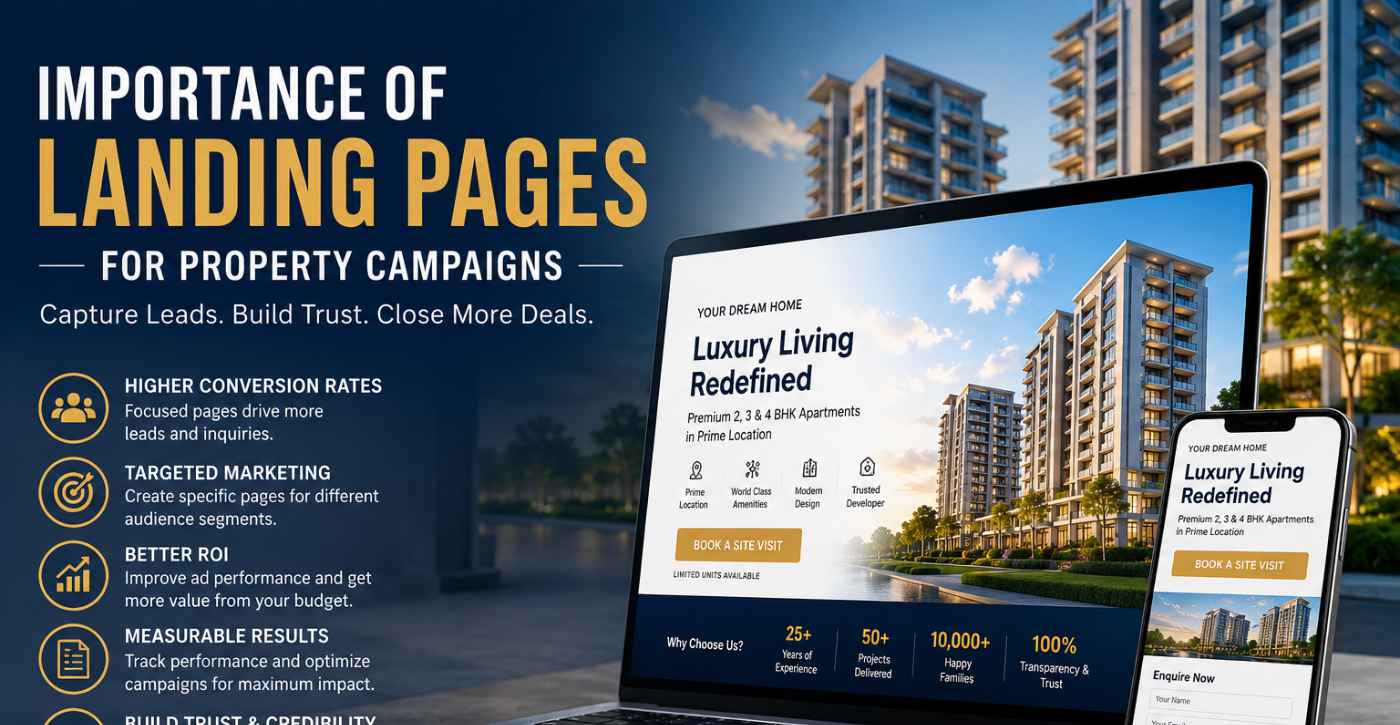
In today’s competitive real estate market, simply listing a property online is no longer enough to capture the attention of potential buyers or investors. With digital marketing evolving rapidly, landing pages have become a powerful tool for real estate professionals to generate leads, nurture prospects, and ultimately close more deals. Whether you are promoting residential apartments, commercial spaces, or luxury villas, a well-crafted landing page can significantly enhance the success of your property campaigns.
What is a Landing Page?
A landing page is a standalone web page designed specifically for a marketing or advertising campaign. Unlike a general website, which contains multiple pages and navigation options, a landing page focuses on a single objective—converting visitors into leads or customers. For property campaigns, this typically means encouraging users to book a site visit, request a brochure, or fill out a contact form.
Why Landing Pages Matter in Property Campaigns
1. Focused User Experience
One of the biggest advantages of a landing page is its simplicity and focus. When potential buyers click on an ad, they expect to find relevant information quickly. A dedicated landing page eliminates distractions and guides users toward a specific action. This focused approach increases the chances of conversion compared to sending traffic to a generic homepage.
2. Higher Conversion Rates
Landing pages are designed with conversion in mind. Every element—from headlines and images to call-to-action (CTA) buttons—is optimized to encourage user engagement. In property campaigns, this could mean showcasing high-quality images, virtual tours, pricing details, and location benefits in a compelling way. As a result, landing pages often deliver higher conversion rates than traditional web pages.
3. Better Lead Generation
Real estate is a lead-driven industry. Landing pages allow you to capture valuable user information such as name, phone number, and email address through forms. This data can then be used for follow-ups, email marketing, and personalized communication. With the right strategy, a single landing page can generate hundreds of qualified leads.
4. Targeted Marketing Campaigns
Landing pages enable you to create highly targeted campaigns for different audience segments. For example, you can design separate landing pages for first-time homebuyers, investors, or luxury property seekers. Each page can highlight specific features and benefits tailored to that audience, making your marketing efforts more effective.
5. Improved Ad Performance
Digital advertising platforms like Google Ads and social media networks reward relevance. When your ad directs users to a landing page that closely matches the ad content, it improves your quality score and reduces cost-per-click (CPC). This means you can get better results while spending less on advertising.
6. Measurable Results and Analytics
Landing pages provide valuable insights into user behavior. You can track metrics such as page views, bounce rates, conversion rates, and time spent on the page. These analytics help you understand what works and what doesn’t, allowing you to optimize your campaigns for better performance.
Key Elements of an Effective Property Landing Page
1. Compelling Headline: The headline is the first thing visitors see. It should clearly communicate the value of the property and capture attention instantly. For example, “Luxury 3BHK Apartments in Prime Location with World-Class Amenities” is more effective than a generic title.
2. High-Quality Visuals: Real estate is a highly visual industry. Use professional images, videos, and virtual tours to showcase the property. High-quality visuals create a strong first impression and help potential buyers visualize their future home.
3. Clear Call-to-Action (CTA): Your CTA should be prominent and easy to understand. Common examples include “Book a Site Visit,” “Download Brochure,” or “Get Pricing Details.” Use contrasting colors and strategic placement to make the CTA stand out.
4. Detailed Property Information: Provide essential details such as location, pricing, floor plans, amenities, and nearby landmarks. However, avoid overwhelming users with too much information. Keep it concise and relevant.
5. Trust Signals: Include elements that build credibility, such as customer testimonials, developer reputation, certifications, and awards. Trust signals reassure potential buyers and increase their confidence in your offering.
6. Mobile Optimization: A significant portion of users browse property listings on their smartphones. Ensure your landing page is mobile-friendly, loads quickly, and provides a seamless user experience across devices.
7. Lead Capture Form: Keep your form simple and easy to fill out. Asking for too much information can discourage users. Typically, name, phone number, and email are sufficient for initial contact.
Benefits of Using Landing Pages in Real Estate Marketing
1. Increased ROI: By improving conversion rates and generating high-quality leads, landing pages help maximize the return on investment (ROI) of your marketing campaigns.
2. Faster Sales Cycle: With targeted messaging and clear CTAs, landing pages accelerate the decision-making process. Interested buyers can quickly take the next step, reducing the overall sales cycle.
3. Brand Consistency: Landing pages allow you to maintain consistent branding across all marketing channels. This strengthens your brand identity and creates a professional image.
4. Flexibility and Customization: You can easily create and modify landing pages for different projects, locations, and campaigns. This flexibility makes it easier to adapt to market trends and customer preferences.
[Also Read: Real Estate Content Marketing: Blogs That Attract Buyers]
Conclusion
Landing pages are no longer optional in real estate marketing—they are essential. They serve as the backbone of successful property campaigns by providing a focused, engaging, and conversion-driven experience for potential buyers. From generating high-quality leads to improving ad performance and boosting ROI, the benefits of landing pages are undeniable.
If you want to stay ahead in the competitive real estate market, investing in well-designed landing pages is a smart and strategic move. By combining compelling content, attractive visuals, and user-friendly design, you can turn your property campaigns into powerful lead-generation machines and achieve long-term success.